

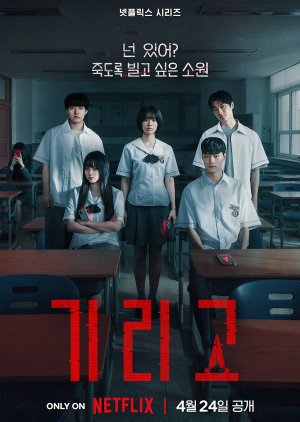
If Wishes Could Kill (2026)
At Seorin High School, a group of five friends discovers a mysterious app called Girigo that promises to grant any wish—but comes with a deadly curse: anyone who uses it faces sudden, unavoidable death. As the friends struggle to understand the app’s dark secrets, they must confront fear, suspicion, and the high cost of desire. Every wish carries a price, and escaping the curse may demand more than they ever imagined. (Source: MyDramaList)
Synopsis
At Seorin High School, a group of five friends discovers a mysterious app called Girigo that promises to grant any wish—but comes with a deadly curse: anyone who uses it faces sudden, unavoidable death. As the friends struggle to understand the app’s dark secrets, they must confront fear, suspicion, and the high cost of desire. Every wish carries a price, and escaping the curse may demand more than they ever imagined.
Reviews
"If Wishes Could Kill" operates on the kind of logic that feels both absurd and uncomfortably believable, like the digital age finally admitting it might actually want you dead. A group of high school students stumbles across an app called Girigo that promises to grant any wish, followed by a neat little 24-hour countdown to your death. It sounds like a joke because it should be one, and for a brief moment, the characters treat it that way, which only makes the shift into horror land harder when the first wish actually works and reality snaps in half.The story settles around five students whose friendships already carry the usual unspoken tensions, the kind that exist in any tightly wound group where affection, jealousy, and insecurity are constantly overlapping. Se-ah and Geon-woo are secretly dating, which feels less romantic than it does fragile, like something that could collapse the second it is exposed. Na-ri openly pursues him anyway, not out of ignorance but out of determination, turning an already unstable situation into something sharper. Around them, the group dynamic starts to erode in small, almost invisible ways before the app steps in and accelerates the damage.What makes the first half work is how deliberately it targets emotional weak points. The horror is not just the inevitability of death but the manipulation leading up to it. The supernatural force uses phantom texts and phone calls to make everyone question what is real and what is betrayal. It understands that in a world mediated through screens, perception is everything, and once that fractures, relationships do not break cleanly, they rot from the inside. The tension builds not through spectacle but through mistrust, and it lands because it feels plausible in a way that is difficult to shake off.Ha-joon, the group’s resident problem-solver, initially approaches the app like a technical issue that can be fixed, which feels almost comforting until it fails. His attempt to delete it leads the story somewhere older and more unsettling, pulling in his estranged sister and her shaman husband and shifting the narrative from digital horror into something rooted in folklore and curse logic. This transition expands the world effectively at first, suggesting that the app is not just a modern anomaly but part of a longer, more tragic chain of events.As the series moves forward, it begins to explore the origin of Girigo, revealing the pain and history embedded within it. There are moments where this deepening of the mythology works, particularly when the characters are forced into confrontations that feel less like plot progression and more like emotional reckoning. The netherworld sequences carry a distinct unease, pushing each character to face fears that feel personal rather than purely supernatural.However, the more the story explains, the more it weakens its own foundation. What begins as a tightly controlled, psychologically driven horror gradually shifts into something over-articulated, where every mystery is unpacked and every connection is clarified. The ambiguity that once created tension is replaced by exposition, and the fear that thrived in uncertainty starts to lose its grip. Instead of letting silence and implication do the work, the narrative insists on filling every gap, as if worried the audience might miss something if left alone with the dark.This shift affects the pacing as well. The second half feels heavier, not because the stakes are higher, but because the story becomes preoccupied with explaining itself. Emotional beats that should linger are often interrupted by information, creating a rhythm that struggles to maintain immersion. The result is a series that continues to look polished and perform well but no longer feels as sharp as it once did.Despite this, the performances remain strong, grounding the more elaborate elements in something recognisably human. The characters are not reduced to archetypes even as the plot becomes more complex, and their fears, desires, and regrets continue to carry weight. There is still an undercurrent of commentary about identity, digital dependency, and the fragility of trust in a hyper-connected world, even if it becomes less subtle over time.In the end, If Wishes Could Kill leaves behind a mixed impression. It is a series with a compelling premise, a strong emotional core, and an early stretch that demonstrates a clear understanding of how to build tension through character and atmosphere. But it also becomes a cautionary example of what happens when a story explains too much of itself, mistaking clarity for depth.It remains engaging, unsettling, and occasionally striking, but never quite as powerful as it is in the moments when it chooses not to explain, when it allows the fear to exist without definition. Those are the moments where it feels most alive, and ironically, the ones it trusts the least.
I you loved watching like night has come you will definitely loved this one with a twist a bit dark and ready yourself ……………………………………………………………………………………………………………………………………………………………………………………………………………………………………………………………………………………………………………………………………………………………………………………………………………………
Videos: Trailer & Teasers
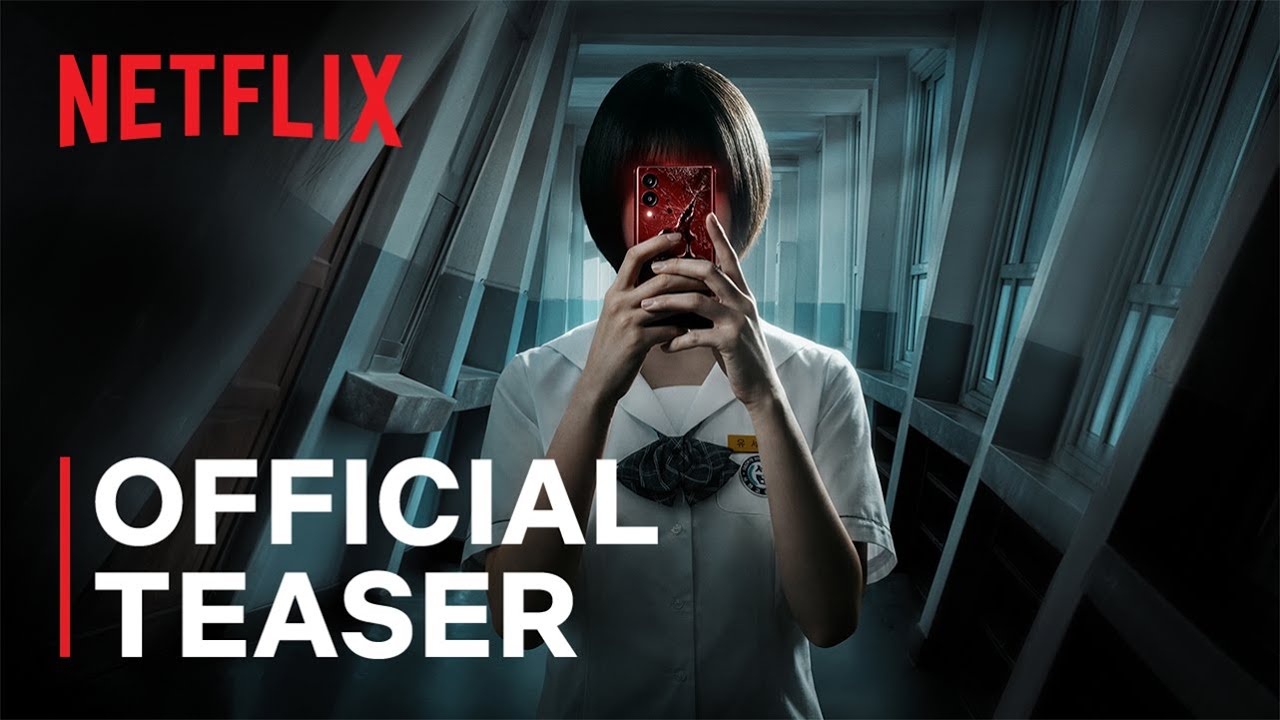
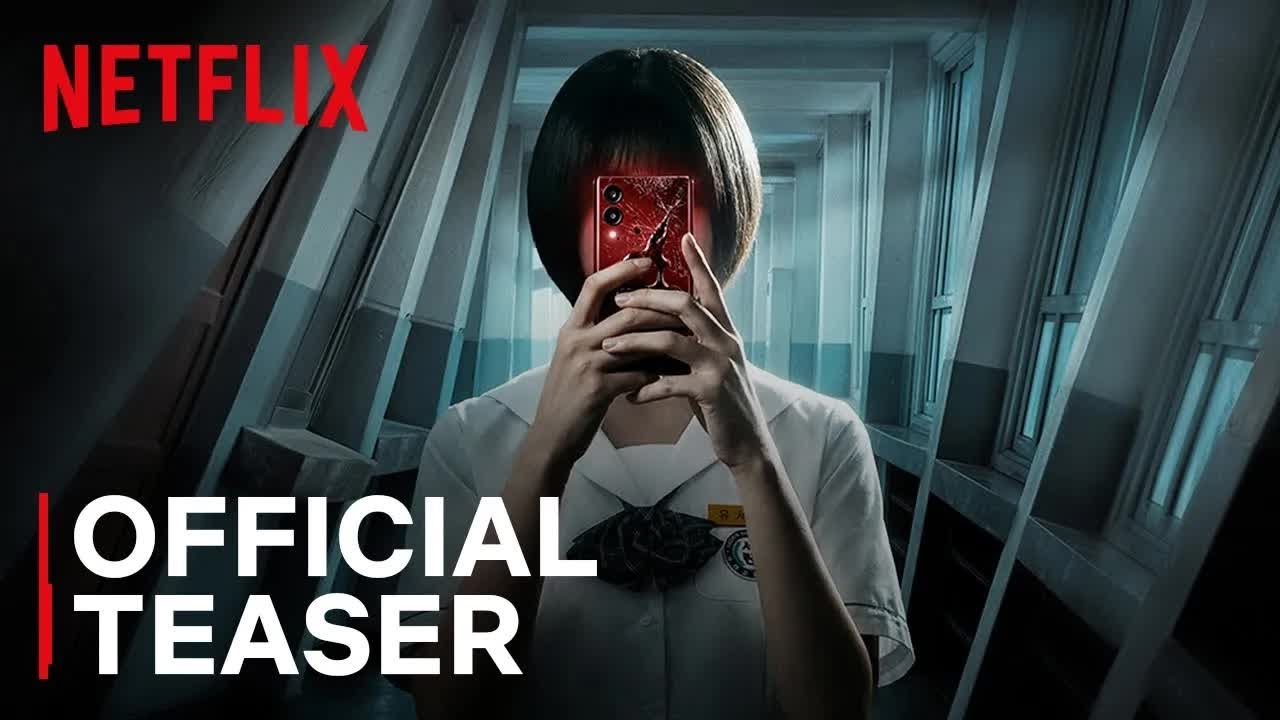
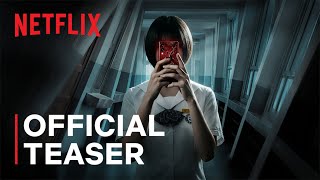
![If Wishes Could Kill | Official Teaser | Netflix [ENG SUB]](https://img.youtube.com/vi/GiPePnmUR8I/maxresdefault.jpg)
Cast







Related News
Joo Se Bin Is Shaken As Baek Seo Ra’s Performance Reminds Her Of Someone In “Doctor Shin”
With just four episodes left until the finale, “Doctor Shin” has unveiled new stills of Baek Seo Ra and Joo Se Bin in a tense face-off! “Doctor Shin”
Esom And Jeon Seok Ho Lead Missing Children Investigation In Yoo Yeon Seok’s Absence In “Phantom Lawyer”
The “Shin I Rang squad” is stepping in for Yoo Yeon Seok’s absence in “Phantom Lawyer”! “Phantom Lawyer” is a quirky yet heartwarming legal drama that
Baek Seo Ra And An Woo Yeon Walk Down The Aisle With Contrasting Emotions In “Doctor Shin”
“Doctor Shin” has unveiled new stills teasing a wedding scene! “Doctor Shin” is a medical thriller that follows a brilliant doctor who pushes medicine
Pyo Ye Jin, Shin Hyun Soo, And More Make Special Appearances In “Filing For Love"
“Filing for Love” has unveiled its star-studded special cameo lineup! “Filing for Love” is a romantic comedy that tells the story of Noh Ki Jun (Gong
Kim Hyang Gi Panics As Cha Hak Yeon Nearly Discovers Her BL Novel In “Absolute Value Of Romance”
Kim Hyang Gi finds herself on the verge of being exposed just as she rises to fame in “Absolute Value of Romance”! “Absolute Value of Romance” tells t
IU And Byeon Woo Seok Have Their First Lovers' Quarrel In "Perfect Crown"
MBC’s “Perfect Crown” has unveiled new stills featuring a tense standoff between IU and Byeon Woo Seok! Set in an alternate universe where modern-day
More Drama News
🔥Can't wait to see LE SSERAFIM perform today, the lineup looks insane 🔥
2hTrending NOW
Watch: TXT Takes 2nd Win For "Stick With You" On "M Countdown"; Performances By NCT WISH, CORTIS, And More
AKMU, KickFlip, BTS, And Hearts2Hearts Top Circle Weekly Charts
Cha Hak Yeon And Kim Ji Eun Join Kim Hee Ae And Noh Sang Hyun’s Korean Remake Of British Series "Gold Digger"
Lee Jun Young’s Path To Soccer Stardom Takes A Turn After Unexpected Soul Swap In New Drama “Reborn Rookie”
Kim Hyang Gi Panics As Cha Hak Yeon Nearly Discovers Her BL Novel In “Absolute Value Of Romance”
Editor's PICK
Super Junior's Eunhyuk Makes Meaningful Donation On His Birthday
Uhm Hyun Kyung And Yoon Jong Hun Share Tender Moment After Office Fallout In “Our Happy Days”
"Yumi's Cells 3" Reveals Adorable Glimpse Of Kim Go Eun And Kim Jae Won's Real-Life Chemistry Behind The Scenes
Wendy, Young K, Kim Jae Joong, And More Announced As Masters For New Audition Show “The Scout”
Park Ji Hoon And Choi Hyun Wook Thrill Fans By Showing Off Their Friendship
Go Doo Shim, Yoon Byung Hee, And More Form Strong Support System Around Ahn Hyo Seop And Chae Won Bin In “Sold Out On You”
If Wishes Could Kill (2026)
At Seorin High School, a group of five friends discovers a mysterious app called Girigo that promises to grant any wish—but comes with a deadly curse: anyone who uses it faces sudden, unavoidable death. As the friends struggle to understand the app’s dark secrets, they must confront fear, suspicion, and the high cost of desire. Every wish carries a price, and escaping the curse may demand more than they ever imagined. (Source: MyDramaList)
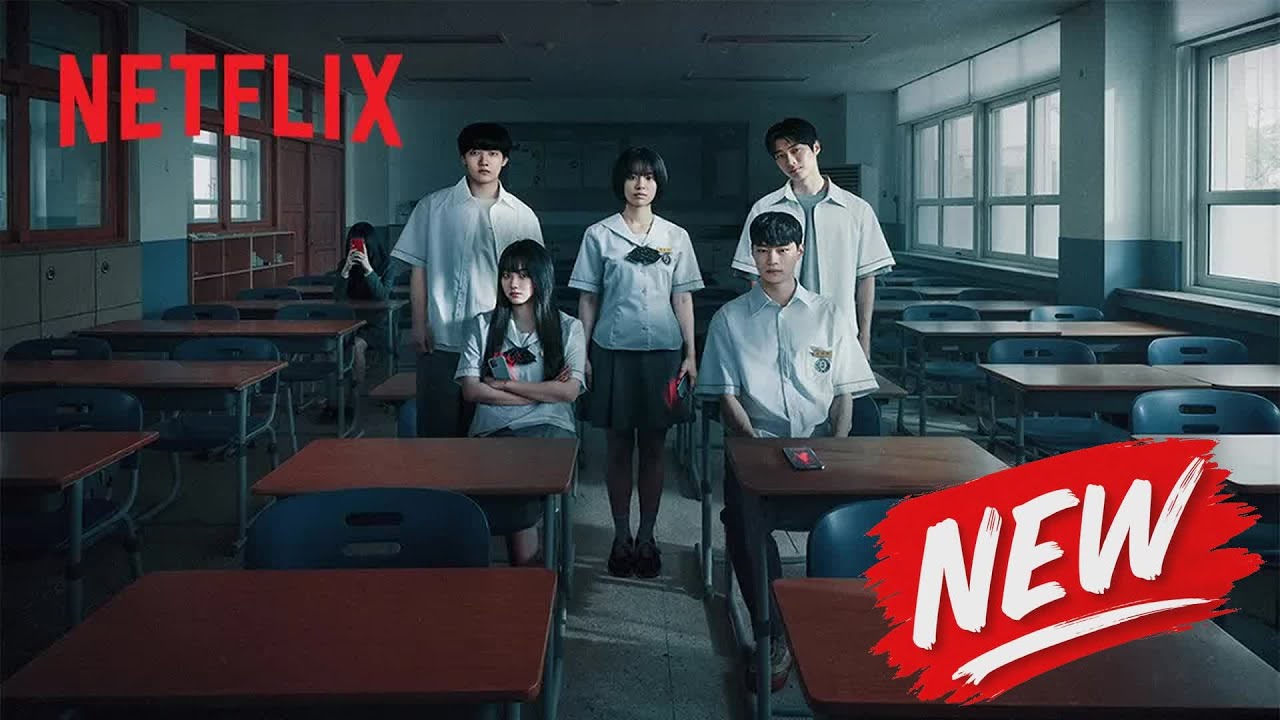
![If Wishes Could Kill | Official Trailer | Netflix [ENG SUB]](https://img.youtube.com/vi/OJsERPNI3D0/maxresdefault.jpg)
Synopsis
"If Wishes Could Kill" operates on the kind of logic that feels both absurd and uncomfortably believable, like the digital age finally admitting it might actually want you dead. A group of high school students stumbles across an app called Girigo that promises to grant any wish, followed by a neat little 24-hour countdown to your death. It sounds like a joke because it should be one, and for a brief moment, the characters treat it that way, which only makes the shift into horror land harder when the first wish actually works and reality snaps in half.The story settles around five students whose friendships already carry the usual unspoken tensions, the kind that exist in any tightly wound group where affection, jealousy, and insecurity are constantly overlapping. Se-ah and Geon-woo are secretly dating, which feels less romantic than it does fragile, like something that could collapse the second it is exposed. Na-ri openly pursues him anyway, not out of ignorance but out of determination, turning an already unstable situation into something sharper. Around them, the group dynamic starts to erode in small, almost invisible ways before the app steps in and accelerates the damage.What makes the first half work is how deliberately it targets emotional weak points. The horror is not just the inevitability of death but the manipulation leading up to it. The supernatural force uses phantom texts and phone calls to make everyone question what is real and what is betrayal. It understands that in a world mediated through screens, perception is everything, and once that fractures, relationships do not break cleanly, they rot from the inside. The tension builds not through spectacle but through mistrust, and it lands because it feels plausible in a way that is difficult to shake off.Ha-joon, the group’s resident problem-solver, initially approaches the app like a technical issue that can be fixed, which feels almost comforting until it fails. His attempt to delete it leads the story somewhere older and more unsettling, pulling in his estranged sister and her shaman husband and shifting the narrative from digital horror into something rooted in folklore and curse logic. This transition expands the world effectively at first, suggesting that the app is not just a modern anomaly but part of a longer, more tragic chain of events.As the series moves forward, it begins to explore the origin of Girigo, revealing the pain and history embedded within it. There are moments where this deepening of the mythology works, particularly when the characters are forced into confrontations that feel less like plot progression and more like emotional reckoning. The netherworld sequences carry a distinct unease, pushing each character to face fears that feel personal rather than purely supernatural.However, the more the story explains, the more it weakens its own foundation. What begins as a tightly controlled, psychologically driven horror gradually shifts into something over-articulated, where every mystery is unpacked and every connection is clarified. The ambiguity that once created tension is replaced by exposition, and the fear that thrived in uncertainty starts to lose its grip. Instead of letting silence and implication do the work, the narrative insists on filling every gap, as if worried the audience might miss something if left alone with the dark.This shift affects the pacing as well. The second half feels heavier, not because the stakes are higher, but because the story becomes preoccupied with explaining itself. Emotional beats that should linger are often interrupted by information, creating a rhythm that struggles to maintain immersion. The result is a series that continues to look polished and perform well but no longer feels as sharp as it once did.Despite this, the performances remain strong, grounding the more elaborate elements in something recognisably human. The characters are not reduced to archetypes even as the plot becomes more complex, and their fears, desires, and regrets continue to carry weight. There is still an undercurrent of commentary about identity, digital dependency, and the fragility of trust in a hyper-connected world, even if it becomes less subtle over time.In the end, If Wishes Could Kill leaves behind a mixed impression. It is a series with a compelling premise, a strong emotional core, and an early stretch that demonstrates a clear understanding of how to build tension through character and atmosphere. But it also becomes a cautionary example of what happens when a story explains too much of itself, mistaking clarity for depth.It remains engaging, unsettling, and occasionally striking, but never quite as powerful as it is in the moments when it chooses not to explain, when it allows the fear to exist without definition. Those are the moments where it feels most alive, and ironically, the ones it trusts the least.
I you loved watching like night has come you will definitely loved this one with a twist a bit dark and ready yourself ……………………………………………………………………………………………………………………………………………………………………………………………………………………………………………………………………………………………………………………………………………………………………………………………………………………
![If Wishes Could Kill | Official Trailer | Netflix [ENG SUB]](https://img.youtube.com/vi/OJsERPNI3D0/mqdefault.jpg)
![If Wishes Could Kill | Official Teaser | Netflix [ENG SUB]](https://img.youtube.com/vi/GiPePnmUR8I/mqdefault.jpg)
Can't wait to see LE SSERAFIM perform today, the lineup looks insane 🔥
2hMore Drama News
🔥Where to Watch
No Providers Found
No watch providers available for this content.
Synopsis
At Seorin High School, a group of five friends discovers a mysterious app called Girigo that promises to grant any wish—but comes with a deadly curse: anyone who uses it faces sudden, unavoidable death. As the friends struggle to understand the app’s dark secrets, they must confront fear, suspicion, and the high cost of desire. Every wish carries a price, and escaping the curse may demand more than they ever imagined. (Source: MyDramaList)
Reviews0
Overall Rating
Rating Distribution
Featured Reviews
Videos: Trailers & Teasers
Cast


 Viewer Ratings
Related News
Joo Se Bin Is Shaken As Baek Seo Ra’s Performance Reminds Her Of Someone In “Doctor Shin”
With just four episodes left until the finale, “Doctor Shin” has unveiled new stills of Baek Seo Ra and Joo Se Bin in a ...
Esom And Jeon Seok Ho Lead Missing Children Investigation In Yoo Yeon Seok’s Absence In “Phantom Lawyer”
The “Shin I Rang squad” is stepping in for Yoo Yeon Seok’s absence in “Phantom Lawyer”! “Phantom Lawyer” is a quirky yet...
Baek Seo Ra And An Woo Yeon Walk Down The Aisle With Contrasting Emotions In “Doctor Shin”
“Doctor Shin” has unveiled new stills teasing a wedding scene! “Doctor Shin” is a medical thriller that follows a brilli...
Pyo Ye Jin, Shin Hyun Soo, And More Make Special Appearances In “Filing For Love"
“Filing for Love” has unveiled its star-studded special cameo lineup! “Filing for Love” is a romantic comedy that tells ...
Kim Hyang Gi Panics As Cha Hak Yeon Nearly Discovers Her BL Novel In “Absolute Value Of Romance”
Kim Hyang Gi finds herself on the verge of being exposed just as she rises to fame in “Absolute Value of Romance”! “Abso...
IU And Byeon Woo Seok Have Their First Lovers' Quarrel In "Perfect Crown"
MBC’s “Perfect Crown” has unveiled new stills featuring a tense standoff between IU and Byeon Woo Seok! Set in an altern...