

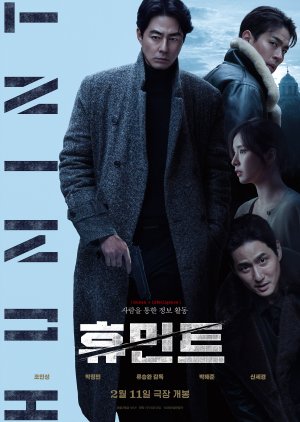
Humint (2026)
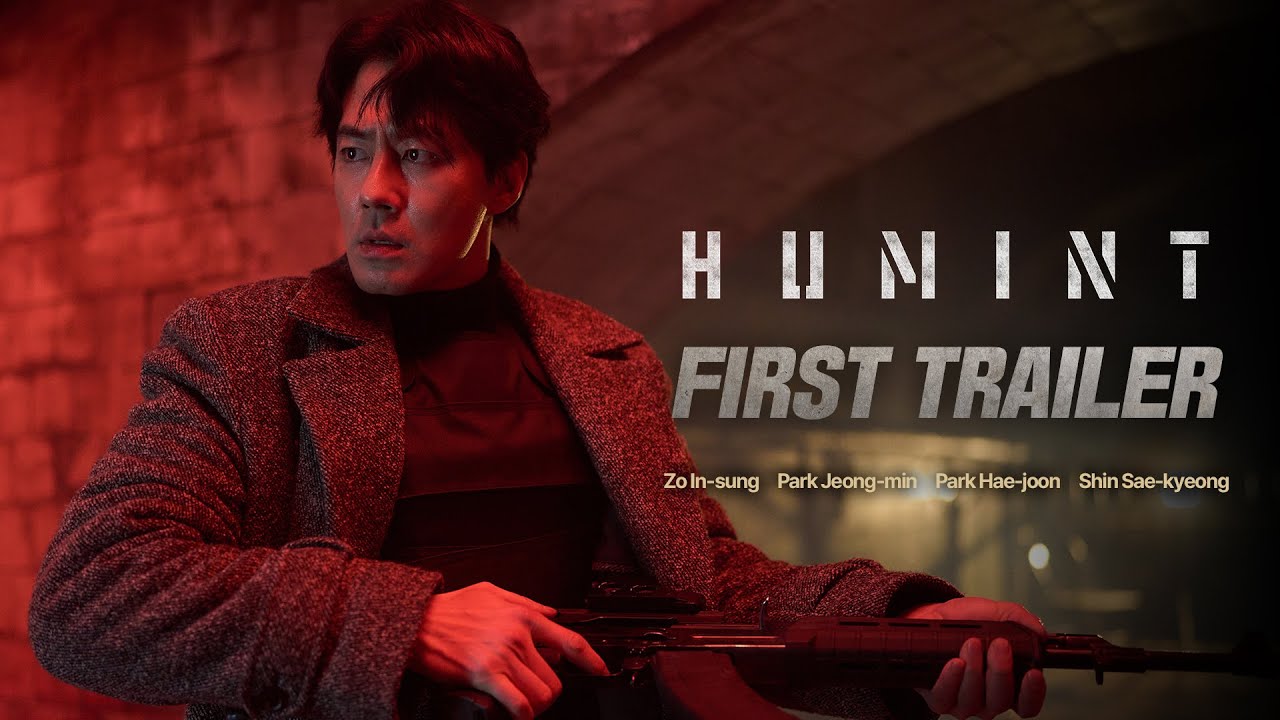
The story depicts secret agents from North and South Korea clashing while uncovering crimes on the Vladivostok border. (Source: screendaily.com)
Synopsis
The story depicts secret agents from North and South Korea clashing while uncovering crimes on the Vladivostok border. (Source: screendaily.
Reviews
With Humint, Ryoo Seung-wan returns to the territory that suits him best, and it shows. The geopolitical thriller shot through with physicality, with the kind of moral pressure that settles into bodies before it ever reaches dialogue, this is his natural habitat, and the film announces it from the very first sequences. The result isn't flawless, but it possesses a quality that's become genuinely hard to find in contemporary spy cinema: it still believes in space. In the weight of environments. In the dramatic value of a door left ajar, a corridor, a face held a second too long. And above all, it believes that action isn't decoration but a form of storytelling which, in 2026, is far from a given.The plot, on paper, is almost classical: a South Korean agent moves through Vladivostok following the trail of a criminal network that crosses drugs, human trafficking, and state intelligence. On the other side there's a North Korean agent, then an ambiguous official, then a woman trapped in the most dangerous role of all that of the informant. Around them, Vladivostok doesn't function as an exotic backdrop, it's not the Russian city dropped in for international flavor but as a moral landscape: a border place, gray, frozen, porous, where everyone watches everyone and no one is ever truly safe. This is where Humint scores its first real point. The city isn't a postcard: it's a hostile surface, full of concrete, hard spaces, corners with no cover. And it's partly from this that the film generates its sustained, almost physical sense of danger.On the screenplay level, Humint operates on a recognizable mechanism: four main characters, four different ethical trajectories, and at the center the figure of the informant as both narrative and moral detonator. What's interesting is that Ryoo doesn't build the film as a purely strategic chess match but as an accumulation of human debts. The debt to the person who puts themselves on the line for you. The debt to the person you love and put in danger. The debt to the State, which demands obedience and gives back cynicism. In this sense, Humint is less a film about intelligence operations per se than a film about the human cost of intelligence — about that precise moment when people stop being "assets" and go back to being human beings: unmanageable, vulnerable, irreducible to protocol.The writing, though, doesn't always match the precision of its themes. And it's worth saying so plainly. In the middle section, the film tends to thicken its web of interests, blackmail, chains of command, double-crosses, and lateral moves with a taste for complication that at times slows things down instead of intensifying them. It's not a problem of density , you can follow the threads , but of dramaturgical hierarchy: certain pieces of information arrive with the weight of a revelation, and then produce no real emotional turn; certain subplots seem more functional to keeping the mechanism running than to actually developing the characters. In other words, the film has more energy than synthesis. You feel it. It's no coincidence that part of the critical conversation has praised the film's spectacular ambition while flagging a certain weakness in dramatic substance relative to the action apparatus and that's not an entirely unfair observation.That said, it would be unfair to stop at the flaw, because Humint constantly recovers ground in the way it stages what it has written. Ryoo Seung-wan understands something elementary and precious: every character has to have their own physical grammar. It's not enough to fight; they have to fight "like him," "like her," according to a rhythm and a posture that tell you who they are. And indeed, this bodily differentiation is one of the film's strongest elements. Manager Zo, whom Jo In-sung plays with an almost elegant restraint, always acts as if trying to keep violence inside a clean, contained line; Park Geon, by contrast, carries a more nervous tension, more intermittent, more exposed to emotional fracture; Hwang brings to the screen an administrative coldness that is itself a threat, with no need to raise his voice; Seon-hwa introduces a vulnerability that isn't passivity but the capacity to choose within the narrowest margin of survival. These aren't just characters: they're vectors of different energy. And when the film stops explaining and simply lets them move, it finally starts to breathe.The direction is the real center of the film. Ryoo comes from a cinema that knows the pleasure of the gesture, but here he largely avoids pure choreographic display for its own sake. The action sequences land because they're legible, articulated in space, never reduced to accelerated cutting designed to simulate intensity without actually building it. You can tell where you are, who enters from where, who sees what, who risks being cornered, who has the positional advantage. It sounds obvious, but it's almost revolutionary today. Even more interesting is the way the director alternates wider shots and compressed close-ups: on one side, the hostility of the world; on the other, the face as the only real battlefield. This dynamic between geographic openness and emotional constriction gives the film a near-classical elegance. It's no surprise that more than one observer has read Humint as a natural continuation of the path begun with The Berlin File and Escape from Mogadishu: the frame changes, but the same faith in the international thriller as a moral device — not just a spectacular one — remains.The atmosphere work is very strong as well. The cinematography pushes toward cold, metallic, matte tones without ever making the film visually monotonous .There's an intelligent use of surfaces, empty spaces, and architecture that conveys the sense of a life lived under constant surveillance. Costumes and interiors help suspend the film in a slightly displaced temporality: contemporary, yes, but never ostentatiously dependent on technology. It's a shrewd choice, because it allows Humint to sidestep the risk of becoming a thriller of screens, pings, software interfaces, and digital exposition dumps. Here, intelligence goes back to being, literally, human: bodies, sources, glances, lies, shifting loyalties. This is also why the film, when it works, generates a tension that is more tactile than cerebral.On the acting front, Zo In-sung carries the film with remarkable presence. He doesn't work through overexpression, and rightly so: his character lives inside guilt, discipline, a reluctance to fail again, and the actor translates all of this into a controlled physicality that occasionally lets a crack show through. Park Jeong-min provides an effective counterpoint, shifting the register toward something more ambiguous and emotional. Park Hae-joon delivers the kind of administrative hardness that always works in spy cinema: evil that doesn't need to raise its voice. Shin Sae-kyeong, finally, had the most delicate task and instead manages to preserve her own opacity, her own concrete fear, her own capacity for decision-making all the way to the end.Humint is not its director's definitive masterpiece, and anyone looking for a perfectly engineered, airtight, zero-redundancy spy mechanism will find things to complain about. The screenplay has some redundant passages and a middle section that isn't as sharp as the opening promises. But it would be foolish to write it off on those grounds, because the film possesses a concrete, muscular, almost artisanal quality that many far more "orderly" thrillers simply don't. It stumbles occasionally in its own complexity, but when it finds its footing again it hits hard in the direction of the action sequences, in the control of space, in the construction of tension, and in that idea, as beautiful as it is bitter, that behind every piece of intelligence there is always someone who pays the full price.If a single blunt formula is called for: Humint convinces more as cinema than as screenplay. But since cinema, fortunately, is not only screenplay that's more than enough to make it a robust, adult, imperfect, and genuinely interesting thriller.
There is an almost unwritten rule in action cinema: a film should declare its intentions within the first few minutes. Ryoo Seung-wan, however, chooses the opposite approach. Humint, recently released on Netflix, opens not with an explosion or a chase, but with a mundane sound: the alarm of an alarm clock.This atypical opening works remarkably well. It does not prepare the viewer; instead, it throws them—just like the protagonist—into a reality whose contours gradually unfold. This discovery is driven by a risky narrative gamble: temporal shifts.Fragmented Structure: Puzzle or Packaging?“Five months later,” “three months earlier”…The director uses these temporal markers to reconstruct, like a puzzle, a complex espionage operation. The intention is clear—fragmenting information to heighten mystery and sustain suspense. In practice, however, the technique tends to become more disruptive than illuminating.This is not a film that is difficult to follow, but rather one that seems reluctant to let its narrative flow naturally. The fragmented editing, designed to conceal and reveal strategically, sometimes confuses more than it clarifies. As a result, tension built in key moments dissipates before reaching its full impact.Beyond the PeninsulaThe action quickly moves beyond South Korea’s borders and extends eastward.Vladivostok becomes more than just an exotic location—it functions as a character in its own right. The Siberian cold, rigid architecture, frozen port, and the inclusion of Russian language elements are not mere background details; they actively shape the film’s visual and tonal identity. The oppressive atmosphere lends authenticity and turns the international sequences into some of the film’s most compelling moments.The actors portraying Russian characters are not Russian but European, among them Robert Maaser as Alexei, a mob figure embodying a threat that exists outside the traditional conflict between the two Koreas.People Between Borders and LoyaltiesAt the center of the story, Zo In-sung delivers an atypical protagonist. Agent Jo is not merely an executor of orders, but a vulnerable character caught between professional duty and human instinct. He resists treating people as disposable “assets,” even as his superiors insist that humanity has no place in such a line of work. This duality provides one of the film’s few genuine emotional anchors.The chemistry between Zo In-sung and Park Jeon-min works exceptionally well. Park brings life to a character who initially appears cold and antagonistic, yet gradually reveals more complexity. Each of his appearances adds rhythm and energy, particularly in the tense confrontations between the two.Shin Sae-kyeong, despite having a leading role, is not afforded the same depth. Her character fluctuates between stereotypical moments and instances of genuine agency, showing courage and presence of mind despite lacking formal training. Her arc exists, but the script does not give it enough room to become truly memorable.Park Hae-joon embodies a classic antagonist archetype: authoritative, convinced of his own invincibility, and certain that the system is on his side. He serves his narrative function effectively but lacks the nuance that could have elevated him beyond a functional character.Overlapping Conflicts, A Lost CoreOne of the film’s central contradictions lies in its ambition. It presents multiple overlapping conflicts: South versus North Korea, internal divisions within each side, and additional layers of tension. On top of this, there is a romantic thread that remains underdeveloped yet persistent, alongside a broader moral dilemma that quietly underpins the narrative.Amid this complexity, the central narrative thread begins to fade.At times, the film seems to lose sight of its original focus, and while the action remains consistently well-executed, it often compensates for a lack of narrative clarity.A Film That Begins and Ends the Same WayAn interesting parallel emerges through the film’s structure. The ending mirrors the beginning—a hotel room, a different city, the same mundane routine. This circular construction recalls literary works where the narrative closes exactly where it began. It is a gesture of symmetry that could have carried deeper meaning, but in Humint, it remains more of a stylistic note than a fully realized concept.SynopsisHumint is a South Korean action thriller directed by Ryoo Seung-wan, following a secret agent entangled in a complex operation set against the backdrop of tensions between North and South Korea. The mission expands internationally as events unfold in Russia, where conflicting interests and fragile alliances further complicate the unfolding intrigue.CastZo In-sung – Agent JoPark Jeon-min – Park GeonShin Sae-kyeong – Chae Seon-hwaPark Hae-joon – Hwang Chi-sungRobert Maaser – AlexeiDirector: Ryoo Seung-wanGenre: Action / Spy ThrillerPlatform: NetflixRuntime: Just over two hoursVerdictHumint is an ambitious film with a strong visual identity and several solid performances, yet it ultimately loses itself in its fragmented structure. It offers plenty of action, engaging characters, and a multi-layered story—but its central thread remains overshadowed.It presents itself as a global thriller but functions as an uneven one: gripping in the moment, yet inconsistent as a whole. Still, it is a film worth watching, particularly for its action sequences and for viewers drawn to the world of Korean espionage and the stark atmosphere of Russia’s Far East.
Bossbobs의 리뷰
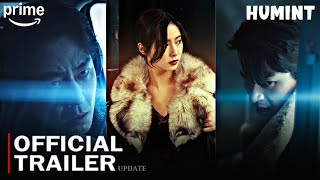
Videos: Trailer & Teasers
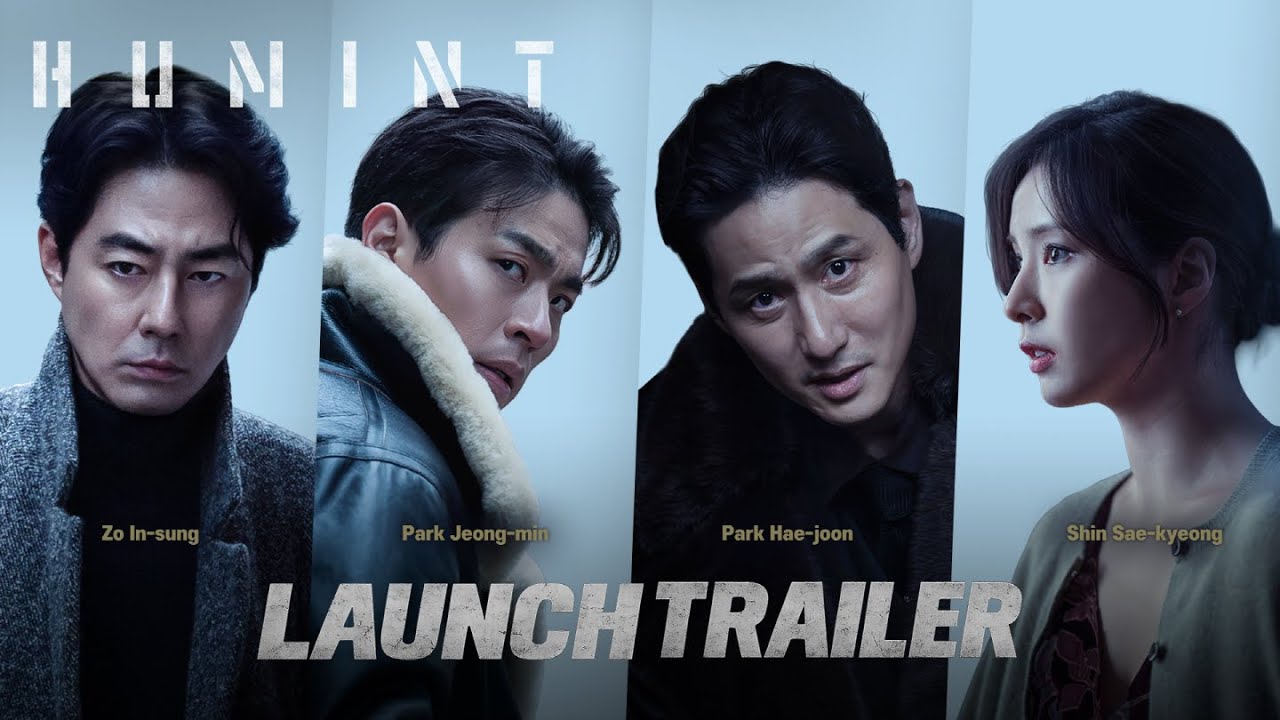
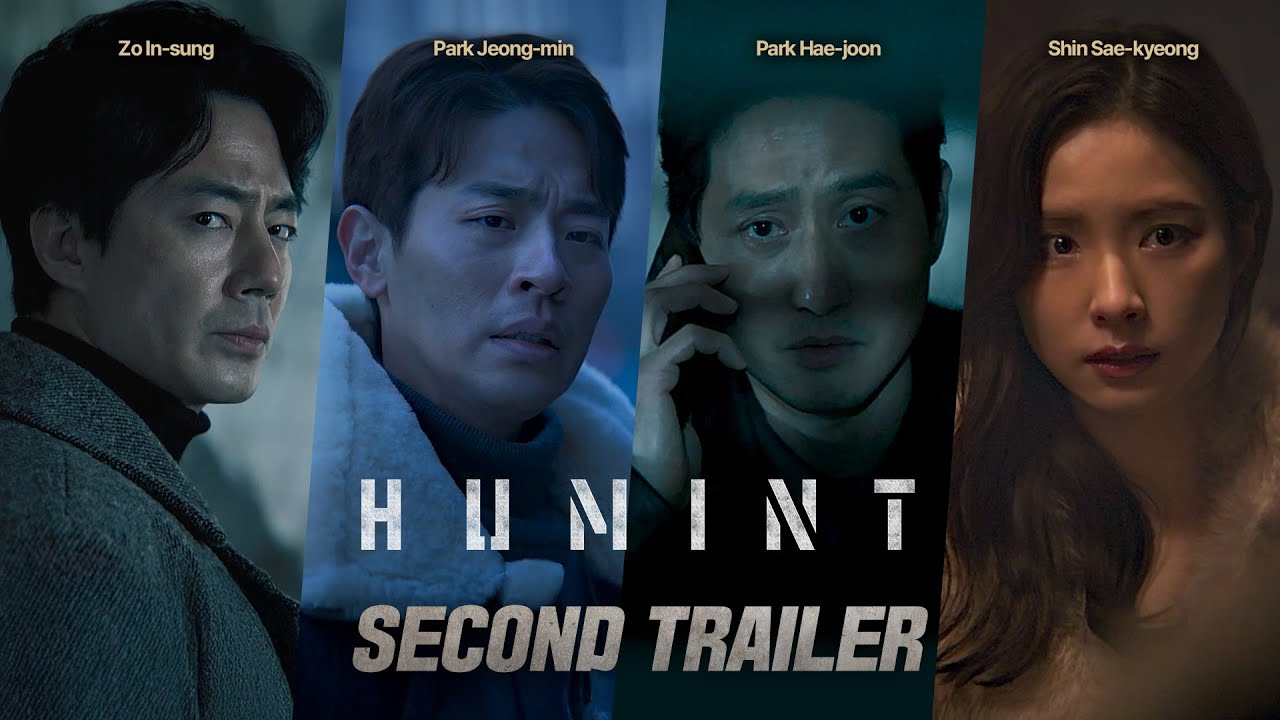
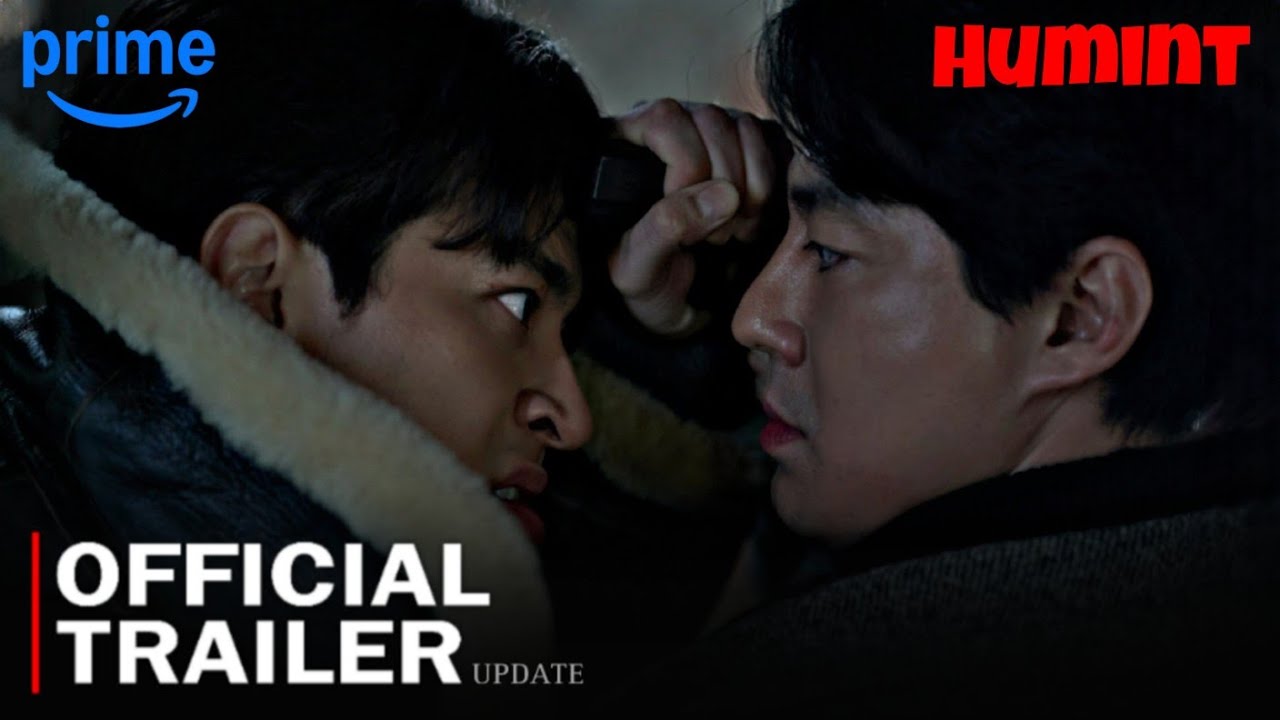

Cast














Related News
Uhm Hyun Kyung Stands Up To Her Mother As Her Father Backs Her Up In “Our Happy Days”
A fiery mother-daughter clash is set to unfold once again in “Our Happy Days.” “Our Happy Days” is a warm family series filled with stories from multi
Koo Kyo Hwan Faces Off Against Oh Jung Se As Park Hae Joon Unexpectedly Appears In "We Are All Trying Here"
JTBC’s “We Are All Trying Here” has unveiled new stills ahead of the upcoming episode! “We Are All Trying Here” tells the story of Hwang Dong Man (Koo
THE BOYZ’s Q, Lee Jin Hyuk, Hwang Ji Ah, And More Confirmed For New Idol Drama “My Idol, My Debut”
MBC Plus’s upcoming drama “My Idol, My Debut” has announced its cast lineup including THE BOYZ’s Q, Lee Jin Hyuk, Lee Jin Kyu, Lee Ho Hyun, Hwang Ji A
5 BLs Where Pretending Becomes Something Real
If you kept track of every BL where “just pretend” became real feelings, you’d have a long list by now. In these BLs, secret identities, hidden agenda
Lee Ju Myoung Is The Hidden Daughter Of Son Hyun Joo Seeking To Prove Her Worth In New Drama “Reborn Rookie”
JTBC’s upcoming Saturday-Sunday drama “Reborn Rookie” has shared the first glimpse of Lee Ju Myoung in character! “Reborn Rookie” follows Kang Yong Ho
Park Eun Bin, Cha Eun Woo, And More Get Entangled In A Fight For Peace In New Action Comedy Drama "The WONDERfools"
Netflix’s upcoming drama “The WONDERfools” has unveiled new character stills! “The WONDERfools” is a superpower comic action set in 1999, a time when
More Drama News
🔥Hold on, are they building a whole new generation rn?? This is insane
3hTrending NOW
LE SSERAFIM Announces Dates And Locations For 2026 World Tour "PUREFLOW"
n.SSign's Laurence Apologizes For Recent Remarks
CIX To Conclude Group Activities + Yonghee To Enlist In Military
Watch: Lee Jae Wook And Shin Ye Eun's New Drama "Doctor On The Edge" Announces Premiere Date With Sneak Peek Of Script Reading
Park Ji Hoon Talks About Why He Chose To Star In "The Legend Of Kitchen Soldier," Role Preparation, And More
Editor's PICK
Super Junior's Eunhyuk Makes Meaningful Donation On His Birthday
Uhm Hyun Kyung And Yoon Jong Hun Share Tender Moment After Office Fallout In “Our Happy Days”
"Yumi's Cells 3" Reveals Adorable Glimpse Of Kim Go Eun And Kim Jae Won's Real-Life Chemistry Behind The Scenes
Shin Hae Sun Turns Gong Myoung's Life Upside Down As Soon As They Meet In "Filing For Love"
Wendy, Young K, Kim Jae Joong, And More Announced As Masters For New Audition Show “The Scout”
Go Doo Shim, Yoon Byung Hee, And More Form Strong Support System Around Ahn Hyo Seop And Chae Won Bin In “Sold Out On You”
Humint (2026)
The story depicts secret agents from North and South Korea clashing while uncovering crimes on the Vladivostok border. (Source: screendaily.com)
Synopsis
With Humint, Ryoo Seung-wan returns to the territory that suits him best, and it shows. The geopolitical thriller shot through with physicality, with the kind of moral pressure that settles into bodies before it ever reaches dialogue, this is his natural habitat, and the film announces it from the very first sequences. The result isn't flawless, but it possesses a quality that's become genuinely hard to find in contemporary spy cinema: it still believes in space. In the weight of environments. In the dramatic value of a door left ajar, a corridor, a face held a second too long. And above all, it believes that action isn't decoration but a form of storytelling which, in 2026, is far from a given.The plot, on paper, is almost classical: a South Korean agent moves through Vladivostok following the trail of a criminal network that crosses drugs, human trafficking, and state intelligence. On the other side there's a North Korean agent, then an ambiguous official, then a woman trapped in the most dangerous role of all that of the informant. Around them, Vladivostok doesn't function as an exotic backdrop, it's not the Russian city dropped in for international flavor but as a moral landscape: a border place, gray, frozen, porous, where everyone watches everyone and no one is ever truly safe. This is where Humint scores its first real point. The city isn't a postcard: it's a hostile surface, full of concrete, hard spaces, corners with no cover. And it's partly from this that the film generates its sustained, almost physical sense of danger.On the screenplay level, Humint operates on a recognizable mechanism: four main characters, four different ethical trajectories, and at the center the figure of the informant as both narrative and moral detonator. What's interesting is that Ryoo doesn't build the film as a purely strategic chess match but as an accumulation of human debts. The debt to the person who puts themselves on the line for you. The debt to the person you love and put in danger. The debt to the State, which demands obedience and gives back cynicism. In this sense, Humint is less a film about intelligence operations per se than a film about the human cost of intelligence — about that precise moment when people stop being "assets" and go back to being human beings: unmanageable, vulnerable, irreducible to protocol.The writing, though, doesn't always match the precision of its themes. And it's worth saying so plainly. In the middle section, the film tends to thicken its web of interests, blackmail, chains of command, double-crosses, and lateral moves with a taste for complication that at times slows things down instead of intensifying them. It's not a problem of density , you can follow the threads , but of dramaturgical hierarchy: certain pieces of information arrive with the weight of a revelation, and then produce no real emotional turn; certain subplots seem more functional to keeping the mechanism running than to actually developing the characters. In other words, the film has more energy than synthesis. You feel it. It's no coincidence that part of the critical conversation has praised the film's spectacular ambition while flagging a certain weakness in dramatic substance relative to the action apparatus and that's not an entirely unfair observation.That said, it would be unfair to stop at the flaw, because Humint constantly recovers ground in the way it stages what it has written. Ryoo Seung-wan understands something elementary and precious: every character has to have their own physical grammar. It's not enough to fight; they have to fight "like him," "like her," according to a rhythm and a posture that tell you who they are. And indeed, this bodily differentiation is one of the film's strongest elements. Manager Zo, whom Jo In-sung plays with an almost elegant restraint, always acts as if trying to keep violence inside a clean, contained line; Park Geon, by contrast, carries a more nervous tension, more intermittent, more exposed to emotional fracture; Hwang brings to the screen an administrative coldness that is itself a threat, with no need to raise his voice; Seon-hwa introduces a vulnerability that isn't passivity but the capacity to choose within the narrowest margin of survival. These aren't just characters: they're vectors of different energy. And when the film stops explaining and simply lets them move, it finally starts to breathe.The direction is the real center of the film. Ryoo comes from a cinema that knows the pleasure of the gesture, but here he largely avoids pure choreographic display for its own sake. The action sequences land because they're legible, articulated in space, never reduced to accelerated cutting designed to simulate intensity without actually building it. You can tell where you are, who enters from where, who sees what, who risks being cornered, who has the positional advantage. It sounds obvious, but it's almost revolutionary today. Even more interesting is the way the director alternates wider shots and compressed close-ups: on one side, the hostility of the world; on the other, the face as the only real battlefield. This dynamic between geographic openness and emotional constriction gives the film a near-classical elegance. It's no surprise that more than one observer has read Humint as a natural continuation of the path begun with The Berlin File and Escape from Mogadishu: the frame changes, but the same faith in the international thriller as a moral device — not just a spectacular one — remains.The atmosphere work is very strong as well. The cinematography pushes toward cold, metallic, matte tones without ever making the film visually monotonous .There's an intelligent use of surfaces, empty spaces, and architecture that conveys the sense of a life lived under constant surveillance. Costumes and interiors help suspend the film in a slightly displaced temporality: contemporary, yes, but never ostentatiously dependent on technology. It's a shrewd choice, because it allows Humint to sidestep the risk of becoming a thriller of screens, pings, software interfaces, and digital exposition dumps. Here, intelligence goes back to being, literally, human: bodies, sources, glances, lies, shifting loyalties. This is also why the film, when it works, generates a tension that is more tactile than cerebral.On the acting front, Zo In-sung carries the film with remarkable presence. He doesn't work through overexpression, and rightly so: his character lives inside guilt, discipline, a reluctance to fail again, and the actor translates all of this into a controlled physicality that occasionally lets a crack show through. Park Jeong-min provides an effective counterpoint, shifting the register toward something more ambiguous and emotional. Park Hae-joon delivers the kind of administrative hardness that always works in spy cinema: evil that doesn't need to raise its voice. Shin Sae-kyeong, finally, had the most delicate task and instead manages to preserve her own opacity, her own concrete fear, her own capacity for decision-making all the way to the end.Humint is not its director's definitive masterpiece, and anyone looking for a perfectly engineered, airtight, zero-redundancy spy mechanism will find things to complain about. The screenplay has some redundant passages and a middle section that isn't as sharp as the opening promises. But it would be foolish to write it off on those grounds, because the film possesses a concrete, muscular, almost artisanal quality that many far more "orderly" thrillers simply don't. It stumbles occasionally in its own complexity, but when it finds its footing again it hits hard in the direction of the action sequences, in the control of space, in the construction of tension, and in that idea, as beautiful as it is bitter, that behind every piece of intelligence there is always someone who pays the full price.If a single blunt formula is called for: Humint convinces more as cinema than as screenplay. But since cinema, fortunately, is not only screenplay that's more than enough to make it a robust, adult, imperfect, and genuinely interesting thriller.
There is an almost unwritten rule in action cinema: a film should declare its intentions within the first few minutes. Ryoo Seung-wan, however, chooses the opposite approach. Humint, recently released on Netflix, opens not with an explosion or a chase, but with a mundane sound: the alarm of an alarm clock.This atypical opening works remarkably well. It does not prepare the viewer; instead, it throws them—just like the protagonist—into a reality whose contours gradually unfold. This discovery is driven by a risky narrative gamble: temporal shifts.Fragmented Structure: Puzzle or Packaging?“Five months later,” “three months earlier”…The director uses these temporal markers to reconstruct, like a puzzle, a complex espionage operation. The intention is clear—fragmenting information to heighten mystery and sustain suspense. In practice, however, the technique tends to become more disruptive than illuminating.This is not a film that is difficult to follow, but rather one that seems reluctant to let its narrative flow naturally. The fragmented editing, designed to conceal and reveal strategically, sometimes confuses more than it clarifies. As a result, tension built in key moments dissipates before reaching its full impact.Beyond the PeninsulaThe action quickly moves beyond South Korea’s borders and extends eastward.Vladivostok becomes more than just an exotic location—it functions as a character in its own right. The Siberian cold, rigid architecture, frozen port, and the inclusion of Russian language elements are not mere background details; they actively shape the film’s visual and tonal identity. The oppressive atmosphere lends authenticity and turns the international sequences into some of the film’s most compelling moments.The actors portraying Russian characters are not Russian but European, among them Robert Maaser as Alexei, a mob figure embodying a threat that exists outside the traditional conflict between the two Koreas.People Between Borders and LoyaltiesAt the center of the story, Zo In-sung delivers an atypical protagonist. Agent Jo is not merely an executor of orders, but a vulnerable character caught between professional duty and human instinct. He resists treating people as disposable “assets,” even as his superiors insist that humanity has no place in such a line of work. This duality provides one of the film’s few genuine emotional anchors.The chemistry between Zo In-sung and Park Jeon-min works exceptionally well. Park brings life to a character who initially appears cold and antagonistic, yet gradually reveals more complexity. Each of his appearances adds rhythm and energy, particularly in the tense confrontations between the two.Shin Sae-kyeong, despite having a leading role, is not afforded the same depth. Her character fluctuates between stereotypical moments and instances of genuine agency, showing courage and presence of mind despite lacking formal training. Her arc exists, but the script does not give it enough room to become truly memorable.Park Hae-joon embodies a classic antagonist archetype: authoritative, convinced of his own invincibility, and certain that the system is on his side. He serves his narrative function effectively but lacks the nuance that could have elevated him beyond a functional character.Overlapping Conflicts, A Lost CoreOne of the film’s central contradictions lies in its ambition. It presents multiple overlapping conflicts: South versus North Korea, internal divisions within each side, and additional layers of tension. On top of this, there is a romantic thread that remains underdeveloped yet persistent, alongside a broader moral dilemma that quietly underpins the narrative.Amid this complexity, the central narrative thread begins to fade.At times, the film seems to lose sight of its original focus, and while the action remains consistently well-executed, it often compensates for a lack of narrative clarity.A Film That Begins and Ends the Same WayAn interesting parallel emerges through the film’s structure. The ending mirrors the beginning—a hotel room, a different city, the same mundane routine. This circular construction recalls literary works where the narrative closes exactly where it began. It is a gesture of symmetry that could have carried deeper meaning, but in Humint, it remains more of a stylistic note than a fully realized concept.SynopsisHumint is a South Korean action thriller directed by Ryoo Seung-wan, following a secret agent entangled in a complex operation set against the backdrop of tensions between North and South Korea. The mission expands internationally as events unfold in Russia, where conflicting interests and fragile alliances further complicate the unfolding intrigue.CastZo In-sung – Agent JoPark Jeon-min – Park GeonShin Sae-kyeong – Chae Seon-hwaPark Hae-joon – Hwang Chi-sungRobert Maaser – AlexeiDirector: Ryoo Seung-wanGenre: Action / Spy ThrillerPlatform: NetflixRuntime: Just over two hoursVerdictHumint is an ambitious film with a strong visual identity and several solid performances, yet it ultimately loses itself in its fragmented structure. It offers plenty of action, engaging characters, and a multi-layered story—but its central thread remains overshadowed.It presents itself as a global thriller but functions as an uneven one: gripping in the moment, yet inconsistent as a whole. Still, it is a film worth watching, particularly for its action sequences and for viewers drawn to the world of Korean espionage and the stark atmosphere of Russia’s Far East.
Bossbobs의 리뷰

Hold on, are they building a whole new generation rn?? This is insane
3hMore Drama News
🔥Where to Watch
No Providers Found
No watch providers available for this content.
Synopsis
The story depicts secret agents from North and South Korea clashing while uncovering crimes on the Vladivostok border. (Source: screendaily.com)
Reviews0
Overall Rating
Rating Distribution
Featured Reviews
Videos: Trailers & Teasers
Cast


 Viewer Ratings
Related News
Uhm Hyun Kyung Stands Up To Her Mother As Her Father Backs Her Up In “Our Happy Days”
A fiery mother-daughter clash is set to unfold once again in “Our Happy Days.” “Our Happy Days” is a warm family series ...
Koo Kyo Hwan Faces Off Against Oh Jung Se As Park Hae Joon Unexpectedly Appears In "We Are All Trying Here"
JTBC’s “We Are All Trying Here” has unveiled new stills ahead of the upcoming episode! “We Are All Trying Here” tells th...
THE BOYZ’s Q, Lee Jin Hyuk, Hwang Ji Ah, And More Confirmed For New Idol Drama “My Idol, My Debut”
MBC Plus’s upcoming drama “My Idol, My Debut” has announced its cast lineup including THE BOYZ’s Q, Lee Jin Hyuk, Lee Ji...
5 BLs Where Pretending Becomes Something Real
If you kept track of every BL where “just pretend” became real feelings, you’d have a long list by now. In these BLs, se...
Lee Ju Myoung Is The Hidden Daughter Of Son Hyun Joo Seeking To Prove Her Worth In New Drama “Reborn Rookie”
JTBC’s upcoming Saturday-Sunday drama “Reborn Rookie” has shared the first glimpse of Lee Ju Myoung in character! “Rebor...
Park Eun Bin, Cha Eun Woo, And More Get Entangled In A Fight For Peace In New Action Comedy Drama "The WONDERfools"
Netflix’s upcoming drama “The WONDERfools” has unveiled new character stills! “The WONDERfools” is a superpower comic ac...