Bloody Flower — A Drama That Never Bloomed If you...
Bloody Flower — A Drama That Never Bloomed If you’re looking for a tightly written, emotionally gripping short K-drama, Bloody Flower may disappoint you. Despite having only eight episodes, it feels stretched rather than sharp. The premise shows promise and the cast delivers decent performances, but the writing lacks depth and momentum.There’s little sense of urgency or anticipation between episodes — it’s not the kind of drama that keeps you counting down to the next release. Much of the storyline feels underdeveloped, making the overall experience feel thinner than it should for an eight-episode series.Watch it if: you’re a fan of the cast or prefer lighter, easy-to-finish dramas.Skip it if: you’re expecting strong storytelling, tight pacing, or high emotional payoff.
This is such a waste. I give up. Bloody Flower, y...
This is such a waste. I give up. Bloody Flower, you're an 8 episode kdrama. You don't have the time and pacing luxury of still not grabbing me by episode 2 on top of some of the worst acting I've seen in recent time.🤨How do you even managed to make a story about saint or sinner serial killer so ungodly boring???No critics on my guy Ryeoun though, he tried his hardest to make the kdrama works, and he did at least showed his range as a serial killer.But everything else around this one just goes against him, I kinda feel bad for him. Hopefully his next project will be better.
This review may contain spoilers The Man Who Ble...
The Man Who Bled Miracles If you think you have seen every flavor of crime thriller, think again. Bloody Flower opens with a bang, or more accurately, a handcuff click. A man named Lee Woo Gyeom is arrested for kidnapping two people with disabilities. Simple enough, right? Wrong. As the investigation unfolds, it turns out he has been conducting human experiments and murdering people in the process. Seventeen victims. All with criminal records. All allegedly used as test subjects in his quest to cure incurable diseases.Lee Woo Gyeom is a medical school dropout who boldly claims he has developed a technology that can cure everything from common illnesses to cancer. The twist is deliciously dark. Patients step forward to testify that they have indeed been cured. He promises to reveal this miracle to the world, but only if he is exempted from punishment for his human experiments. If not, he threatens to take his own life, and with him, the cure that exists only in his mind. Standing at the crossroads are a desperate lawyer who needs Woo Gyeom alive to save his daughter with a brain tumor, and Prosecutor Cha Yi Yeon, who wants him sentenced to death for the seventeen lives he took. The question lingers like a stubborn echo. Is Lee Woo Gyeom a monster, or is he humanity’s forbidden savior?What pulled me in from the very beginning was the morally grey battlefield. Seventeen murders are not a small number. But when those seventeen victims all had criminal records and slipped through the cracks of a lenient justice system, the narrative starts playing chess with your conscience. Humanism versus justice becomes the main dish, and we, the viewers, are forced to pick a side whether we like it or not. The dark allure of this premise had me glued to my seat. It felt like watching a philosophical debate disguised as a thriller.Up until episode four, Lee Woo Gyeom remains an enigma wrapped in a lab coat. Is he a psycho doctor straight out of a horror manual? Perhaps. He does not seem to fully grasp the moral weight of taking lives, referring to his victims more as test subjects than as people. But here is the twist in my own heart. I believe he is good at heart. He does not kill for pleasure. He kills with purpose. Twisted purpose, yes, but purpose nonetheless. His journey into human experimentation did not begin with people. It started with plants, then a goldfish, then a cat, and only then humans. There is a strange, almost scientific progression there. Add to that the revelation that there is a specific pattern among his victims, and suddenly this is less random slaughter and more calculated vengeance or perhaps justice in his own warped dictionary. The mystery only deepens.Then there is Prosecutor Cha Yi Yeon. As someone who usually champions strong female leads, I cannot believe I am saying this, but she tested my patience. For her, the world is black and white. You kill, you are wrong. End of discussion. She does not care about the lives potentially saved by Woo Gyeom’s research. She sees seventeen corpses and that is enough. I understand her need to prove herself, especially with her father looming in the background, but her inability to listen or empathize makes her feel robotic. Even her investigative arc feels oddly written. She has a whole team, yet she does most of the legwork herself while her subordinates hover in the background holding files that rarely add impact. Her sense of justice is textbook, rigid, and at times frustratingly tone deaf. Geum Sae Rok tries, but the character feels more like a plot device than a fully fleshed out person.In contrast, Park Han Jun is the emotional anchor of the story. Portrayed by Sung Dong Il with the gravitas of a seasoned actor, he is a father first and a lawyer second. His daughter, Park Min Seo, is dying from a brain tumor. Suddenly, justice is not so simple anymore. This righteous man who once abided strictly by the law finds himself bending the rules to save his child. His partnership with Lee Woo Gyeom is one of the most compelling dynamics in the drama. They begin as reluctant allies. One is a convicted killer, the other a man of the law. Yet slowly, through shared desperation and quiet understanding, they form something resembling trust. Maybe even friendship.When Lee Woo Gyeom rushes, injured, to save Min Seo and says he has to save her first, I was genuinely moved. For someone accused of being a heartless killer, his concern for his patients feels real. He even appears willing to defy court orders to help her. That mutual gratitude between him and Park Han Jun creates some of the drama’s most touching moments. It is a relationship built not on legality, but on humanity.The plot thickens further when we learn that Woo Gyeom’s cure lies in his blood. Specifically, his rare RH null blood. But this miracle comes with a cruel limitation. The more blood he donates, the more his body regenerates new blood that lacks the same healing properties. In other words, he is not an infinite potion bottle in a fantasy RPG. He is human. Fragile. Exhaustible. This revelation made me nervous. If his blood is the key, what is stopping the world from turning him into a walking laboratory?The backstory hits like a truck in the final stretch. Woo Gyeom was once just a brilliant kid with a loving mother. An accident and his rare blood type turned him into a prime target for Chaeum, the shadowy organization behind grotesque experiments. Not only was he experimented on, but his mother was silenced after discovering too much. Chaeum’s body count stands at 223 victims. Suddenly, Woo Gyeom’s seventeen does not look like madness. It looks like retaliation. Pain breeding pain. No wonder he took drastic measures. The real monster may have been hiding in a corporate lab all along.The final confrontation reveals Chae Jeong Su as the true psychopath, obsessed with medical breakthroughs at the cost of human lives. Watching Woo Gyeom stab his eye felt both shocking and strangely satisfying. Justice, served with a sharp object. The climax escalates quickly. Police arrive. Cha Yi Yeon stands firm. Shots are fired. In one of the most touching moments, Park Han Jun steps in front of Woo Gyeom and takes a bullet for him. A former prosecutor shielding a wanted criminal. If that is not character development, I do not know what is. Woo Gyeom is eventually shot and jumps off a bridge. For a moment, it feels like tragedy has won.The resolution wraps up corruption cases at lightning speed, almost too quickly, like the drama suddenly remembered it had a time limit. And then, the final twist. Just as Park Han Jun is about to discard the cure, Woo Gyeom calls. He is alive. I knew it. You cannot keep a Bloody Flower from blooming, can you?Ryeo Un delivers an eerie yet magnetic performance as Lee Woo Gyeom. His large expressive eyes and deep voice make it easy to believe both the cold scientist and the wounded son. He walks a tightrope between psycho and prodigy, and somehow never falls. Sung Dong Il, as expected, brings weight and warmth to Park Han Jun, embodying a father pushed to his limits. The chemistry between these two is the heart of the drama. Their evolution from distrust to solidarity is memorable and deeply affecting.Bloody Flower is not perfect. Some arcs feel rushed, and Cha Yi Yeon’s character may test your blood pressure. But if you enjoy stories that force you to question your moral compass, this one will keep you hooked. It asks a dangerous question. If a killer can cure the world, do you save him or condemn him? In the end, Bloody Flower does not hand you an easy answer. It simply lets the petals fall and leaves you to decide whether they are stained with blood or sacrifice.
This review may contain spoilers Watched it for ...
Watched it for Ryeoun, but end up liking the Main girl and Lawyer better Don’t get me wrong, I love Ryeoun’s character and his character definitely got a very cool concept. But I just think it wasn’t executed as well since it’s such a complex character for such a short drama. Like he seems like a good person but why did he kill 17 people? His character kinda just sways around, very mysterious and I really don’t know what his personality truly is like. (Maybe I didn’t watch it well so pls tell me if you know)For the main girl and the lawyer (I don’t remember names bro) They have a clear personality and doesn’t go out of character. I find their dynamic very interesting. They contrast each other greatly, the main girl is logical while the lawyer is emotional. But in reality they are like two sides of the same coin, both very determined and would do anything to achieve their goals.The last two episodes felt a bit rushed, I wish this drama is longer so we can get a deeper look at Ryeoun’s character. I still enjoyed watching it though, the first 6 episodes are great
A Dark Bloom That Kept Me Breathless ? Bloody Flo...
A Dark Bloom That Kept Me Breathless ? Bloody Flower is one of those short dramas that proves you don’t need 16 episodes to leave a massive impact. With only eight episodes, it delivers pure tension, tight storytelling, and emotional intensity without a single wasted moment. From episode one, there’s this quiet storm building beneath every scene, and it never lets you feel completely safe. I was genuinely on edge the entire time 😭✨ Every episode ends in a way that makes it impossible not to click “next.”Ryeoun absolutely impressed me here. He carries such emotional weight with subtlety and control, balancing vulnerability and strength so naturally. His performance feels mature and layered, especially in the more intense scenes. You can see everything flicker across his face without him needing to say much, and that kind of acting always stands out to me 👏🔥Keum Sae-rok is equally powerful. She brings depth, intensity, and emotional sincerity that makes every scene feel grounded and real. The chemistry between her and Ryeo Un is full of tension and meaning, and it adds so much to the overall atmosphere. Their scenes together are charged, emotional, and impossible to ignore.And of course, Sung Dong-il once again proves why he’s such a legend. His presence alone elevates the drama. He brings complexity and quiet authority that adds gravity to the entire story. The supporting cast as a whole deserves so much appreciation too. Every character feels necessary, every performance feels intentional. No one fades into the background.What I loved most is that the suspense never relies on cheap tricks. It’s psychological, emotional, and carefully built. And the ending? I genuinely loved it 🥹🌹 It felt satisfying, earned, and true to the journey we were taken on. Bloody Flower (2026) is intense, gripping, beautifully acted, and unforgettable. Eight episodes of pure edge-of-your-seat storytelling, and I loved every second of it.
Unlikable Women, Beloved Male Monsters: Bloody Flo...
Unlikable Women, Beloved Male Monsters: Bloody Flower and Audience Bias. It’s easier to mock a reflection than to sit with it. I’m offering you a lens, not a defense. In just two episodes, the FL has triggered strong reactions. It’s telling that a principled female prosecutor enforcing the law draws more personal hostility than any openly corrupt male prosecutor, because we’re often harsher on women for how they assert authority than on men for how they abuse it. Calling her a “poorly written character” is the laziest takeaway when the drama is clearly presenting a complex plot filled with morally layered, EQUALLY criticisable characters. Reducing that complexity to a single dismissive label is more annoying than people are claiming FL to be.———CHARACTER VS. PORTRAYAL: WHERE BIAS BEGINS.Before diving into the tropes, ask yourself if she is actually a poorly written character, or am I reacting to the way the camera, the music, and the script tell me to feel about her? Prosecutor Cha Yiyeon is essentially the "no nonsense" backbone of the show. She represents institutional integrity and rational justice in contrast to Woogyeom’s dangerous messianic logic and Hajoon’s emotionally compromised defense. She functions as the drama’s ethical anchor, cold when needed and relentlessly committed to truth over sentiment. She’s the type of prosecutor who doesn’t care about public opinion or sob stories, she looks at the forensics and the cold hard logic.Now, scripts often frame a woman’s competence as "arrogance" and a man’s competence as "confidence." This drama consistently positions her as the one character who refuses to accept blurred moral lines. She is not meant to be “liked” first, she is meant to be RIGHT. While others are ruled by grief/ hope/ obsession, she survives by detaching. Emotional distance becomes a defense mechanism against manipulation. Her femininity is neither weaponised nor erased, it is simply irrelevant to her function. The drama lets her occupy power without explanation (as seen in various Male characters). This portrayal questions discomfort with women who refuse emotional labor. Early episodes deliberately position her as an obstacle, she “blocks cures”, she dismantles hope, she appears to stand in the way of a “dying child’s salvation”. On a thematic level, she symbolises the limit of what society is allowed to excuse and the boundary between science and barbarism.In Judge Returns drama, Prosecutor Kim Jina relentlessly pursues Jang Taeshik who has wronged her and her father, yet she isn’t framed as annoying or cruel because we see a tragic backstory (narrative framing). In Bloody Flower, viewers are first aligned with a dying child, a desperate father, and the hope of a miracle. By the time Yiyeon enters, empathy has already been assigned, she feels like an intruder. She isn’t shown privately doubting or emotionally conflicted as the camera withholds her inner life until episode 5. People often mistake the absence of visible emotion for the absence of empathy. Her dialogue is procedural and corrective, while others speak in pain and longing. One sounds human, the other institutional and that’s framing, NOT a character failure. ———QUESTIONING THE AUDIENCE: WHEN “CRITIQUES” BECOME HATEFUL.To the people calling FL “arrogant and annoying”, I genuinely want to ask, who in this drama isn’t? Woogyeom is arrogant. He carries himself with intellectual superiority and believes his moral reasoning is above everyone else’s. The defense attorney bends situations to his advantage, plays strategic games in court, and operates with clear personal motives. Chief Pyo and Chairman Chae are arrogant. Every major character in this drama is morally rigid in their own way. They all believe they’re right and operate from conviction. The difference is whose conviction the camera invites us to sympathise with. If arrogance is the standard, then it applies to all of them. The question is why hers is the one that triggers the strongest reaction? People will eat up the most overdone, cringe, damsel in distress female lead in a rom com without blinking but when a woman shows conviction and refuses to soften herself, she’s irritating? Woogyeom is ALLOWED to be complex. We’re given space to explore his psychology and entertain the possibility that there’s “more” to him but a prosecutor cannot be complex? She’s reduced to “annoying.” We’re willing to grant narrative grace to a man who killed 17 people, yet a “cold/rude” prosecutor who is passionate about enforcing the law is denied that same grace. FL has to be palatable, emotionally pleasing, and somehow redeem herself to be tolerated on screen? That double standard is appalling.In Bad Prosecutor drama, ML broke law left and right while carrying a prosecutor badge, acted reckless, arrogant, and completely over the top and not once did people mass label him “annoying.” He was called bold, entertaining, savage. But suddenly a woman who is strict, composed, and legally within her role is “too much”? Her position is clear: murder is not justifiable especially in this case. We’ve been shown multiple times that her determination to prosecute this killer isn’t baseless or emotional chaos. Her logic stands and her stance is consistent. That suggests this isn’t just about her actions, it’s about how quickly women are judged for traits men have been allowed to embody for years. By episode 3, we get more context, her father visiting and her concern about rumors, her being dismissed by Chief Pyo with the classic “you’re being sensitive because you’re a woman.” She calls out unfair treatment and stands her ground. Women being labeled emotional or hysterical for asserting themselves is not new. So yes, she is firm. Yes, she can be sharp. But in a male dominated environment, do you really think she could survive professionally by softening herself to appease people who already dislike her? Is she rude? Sometimes but to whom and in what context? Being hard headed while prosecuting a killer doesn’t warrant the level of hostility she’s receiving. What I find interesting is that people aren’t nearly as critical or moral policing a father prioritising personal benefit during a murder trial but they’re intensely critical of a prosecutor being professional and focused on the crime itself. When the presiding judge states, “What’s important in this case is the murder, not the treatment,” that line clarifies the legal core of the narrative. This is a murder trial. The central issue is accountability for 17 deaths. I’m not claiming she’s flawless or that she hasn’t made questionable choices. If we’re going to critique questionable decisions, shouldn’t that standard apply to everyone? Every major character in this drama has made morally grey or self serving choices. Yet she’s the only one being relentlessly put on trial by the audience. That imbalance is what doesn’t make sense to me. Criticism is fair but selective criticism isn’t. If we’re going to critique, let’s critique consistently.Recognising when a story is guiding your sympathy is engaging with it critically instead of falling into the most convenient reaction. People rarely dissect or question their own feelings enough to police it, so they come to MDL to spill their unfiltered thoughts. Understandable but not justifiable. I can see where this stereotypical hate/annoyance/criticism is coming from but it is still not fair, excusable or justified. ———GENDERED EXPECTATIONS OF EMPATHY Male prosecutors who act like FL are often praised as “cool headed” and “professional”. She is instead labeled as “heartless”, “crazy”, “inhumane”, “cold”. People subconsciously expect women to bend, sympathise, emotionally yield. This prosecutor refuses to perform that emotional labor. FL’s are vilified for the same grit, ambition, or "unpleasant" traits that make male anti heroes legendary. We see a character like Vincenzo as "badass" because his violence is coded as strategic brilliance. However, FL in Bloody Flower or Eve drama is labeled "heartless" or "bitchy," and her obsession is dismissed as being "hysterical" or "too much." The man is seen as having a mission but the woman is seen as having a personality defect. In male leads, ambition is equated with "leadership material". For female leads, this drive is often twisted into something sinister. Her desire for power is framed as being "power hungry" or "manipulative," suggesting that her influence is unearned or gained through deceit. This framing is evident in the earlier episodes, where other characters repeatedly question her motives, suggesting she’s taking the case merely to secure a promotion. While the man is praised for climbing the mountain, the woman is criticised for even wanting to stand on the peak. Hwang Simok in Stranger was emotionally restrained, procedural, evidence driven, unmoved by sympathy, and refused moral shortcuts. He was praised as principled and the ideal prosecutor and his lack of emotion framed as intellectual superiority. Yiyeon shows similar restraint, but hers is read as emotional deficiency. Park Jungje in Beyond Evil drama protected procedure, sacrificed likability, and focused on consequences. He was seen as strong leadership, a necessary evil. Yiyeon is written with the moral spine of classic male prosecutor leads, just without tragic backstories, emotional exposition, or cinematic glorification (yet). Men are allowed to be difficult and respected for it. Women are expected to be difficult and emotionally accommodating. If her character were a man, would you be cheering for “him”? If the answer is yes, the problem isn't her character.———WHY THE HATE IS WRONG AND WHAT HATING A CHARACTER LIKE HER ACTUALLY SIGNALS.So far Yiyeon is the only constant moral line in this narrative. Disliking her for that is disliking the concept of justice when it’s inconvenient. While others focus on saving “one child”, she protects the future by preventing a world where human experimentation, coerced sacrifice, and “acceptable losses” become normalised. The discomfort she creates isn’t wrongdoing, it comes from her refusal to take emotional shortcuts. She isn’t there to heal, understand, or redeem any character, she’s there to stop a killer. She isn’t written to be adored, she’s written to hold the line when everyone else lets go.People may have internalised expectations that women should mediate conflict and not enforce consequences, women should empathise first and judge later, women should soften justice with care. Stories train us to empathise with pain over principle, especially male pain framed as tragic and redeemable, so some people root for him because he offers emotional catharsis while she withholds it. When people are reacting the way they are in comment section, it signals that female authority is still emotionally conditional, women enforcing consequences are seen as “mean” while men doing the same are “decisive.” Discomfort is not misogyny, but unexamined discomfort can hide bias. If her presence irritates us more than his violence moves us, that says a lot.This isn’t simply “people hating a female character.” It reflects how stories condition audiences to punish women for restraint. It echoes an old patriarchal myth that men create meaning through action, women preserve order through sacrifice. When a woman refuses to sacrifice especially emotionally, she is coded as unnatural.———THE "CASUAL WATCHER" LENS & WHY ARE PEOPLE ROOTING FOR A SERIAL KILLER OVER A FEMALE PROSECUTOR The casual viewer often watches for escapism and "comfort." There is a subconscious comfort in the "soft" FL the one who is obedient, soft voiced, and needs saving. She doesn't challenge the viewer's ego. When a woman is written as a "Strong FL," she often becomes a target for criticism the moment she stops being male centric. If her goals don't serve the ML’s arc, she is labeled "annoying" or "boring."FL represents rules and audiences are conditioned to resent rules when they disrupt a man’s exceptional narrative. Woogyeom fits the fantasy that extraordinary people shouldn’t be bound by ordinary rules a trope we see in genius surgeons, rogue cops, visionary CEOs. Supporting a killer with a “cause” simplifies morality, bad acts justified by good outcomes while supporting a prosecutor requires holding tension…. suffering is real, and murder is still murder. That’s cognitively harder. Rooting for the killer can become a way to imagine being saved at any cost and the prosecutor threatens that comfort by reminding us the moral price always exists. One carries forbidden wishes and the other carries collective responsibility.(Here I cannot go in depth describing these various complex characters from other dramas, so I’m just summarising them to show why portrayal matters.) In Eve drama, Lee Rael commits manipulation and psychological destruction, yet her revenge is aestheticised through stylised visuals and operatic framing, making beauty and trauma feel like justification. In Memorist drama, Dong Baek violates boundaries and makes unilateral decisions, but because his power is framed as a burden, with visible exhaustion and emotional transparency viewers forgive him, while similarly powerful characters without vulnerability cues are seen as monsters. Bad Prosecutor drama proves tone is moral permission, law breaking feels heroic when comedic, unacceptable when serious. And in Mouse drama, by controlling POV and intimacy, it makes viewers root for a serial killer until the framing shifts. The conclusion is that audiences follow narrative intimacy, not ethics. Whoever the story lets us feel alongside becomes forgivable and whoever is framed without emotional access becomes “unlikable,” even if they’re right.———WOMEN IN FILM AND WHY MAKE THIS A GENDER WAR? Across Kdramas and globally women are often “allowed” power only if it is softened. Even when female characters are professionals, socially powerful, or morally driven, the narrative inserts undercutting traits like childishness, clumsiness, emotional volatility, or helplessness to reduce their authority. Female power is still treated as something audiences must be eased into, not confronted with directly. This works as an “appeal insurance” mechanism, give her moments of weakness to emphasise femininity and increase likability. It reassures viewers she is not “too much,” creates opportunities for male characters to rescue or balance her, and preserves romantic hierarchy even if she outranks him professionally. Historically, this evolved from the “Candy Girl” era (cheerful, enduring, waiting to be chosen) to the transitional working woman who still needed emotional taming, and now to the “conditional authority” woman (independent and skilled, but required to stumble, doubt herself, and remain emotionally accessible). This is progress, but not neutrality. Even today, male characters can be stoic, rigid, or abrasive without losing authority, while women’s competence must be contextualised and justified. As representation expands, revenge driven leads, middle aged protagonists, antiheroines backlash often increases. The issue isn’t that women are shown as strong…. it’s that their strength is still treated as something they must compensate for.My frustration isn’t about one drama, it’s about pattern that I’m recognising. I’m noticing how easily audiences forgive violent men, how quickly women are stripped of nuance, and how “likability” becomes a tool to discipline female authority. Women are embraced when their authority looks like care, when they show emotional vulnerability, when they sacrifice visibly, or when they center male pain. If those cushions are present, she’s “strong but likable.” If not, tolerance drops fast. So when a woman speaks plainly, enforces rules, and refuses to emotionally compensate for her authority, she’s labeled cold, annoying, or unlikeable, not because she’s wrong, but because she isn’t performing warmth alongside power. Likability is treated as a moral requirement for women and a bonus trait for men. When she chooses principle over palatability, the narrative often allows the audience to reject her. In many genre dramas, ML’s are the axis of meaning and women orbit around them. FL is accepted when she supports /motivates/ emotionally sustains a male arc. The moment she acts independently, especially against a man’s interests, she’s recoded as obstruction. This quietly teaches us whose perspective matters, whose anger is justified, and whose autonomy is negotiable. Pointing that out isn’t attacking men, it’s questioning why similar behaviors are judged differently depending on who displays them.———“AND THAT’S MY OPINION!!!”Difference in opinion is valid but when the reaction is intense, repetitive, or disproportionate to what she’s actually done on screen, it’s also valid to examine why. ———MY THOUGHTS ON THIS DRAMA Bloody Flower stands out to me for its moral tension…a killer claiming salvation, a desperate defense, and a prosecutor representing accountability. The discomfort is intentional and that’s its strength. Watch it if you’re ready to have your morals challenged.
This review may contain spoilers the story, acti...
the story, acting, plot at first i was doubtful about woogyeom, but after knowing the real story i felt sorry for him, he became chaeum's experimental material for the healing medicine, his mother searched for him until she finally died, he was also a good son to his mother. and in the ending it turned out he was still aliveryeoun's acting is amazing 🔥 his chemistry with dongil is also good. 8 episodes but the plot is slow.. 🥲i hope there will be a season 2, yiyeon's character has changed from being annoying to not being anymore. lastly, i want to see hanjun's daughter wake up from her illness
Masterfully Crafted Drama with Outstanding Acting ...
Masterfully Crafted Drama with Outstanding Acting and a Powerful Ending” Overall, the drama was impressively crafted. Despite the slow pacing and the complex narrative at the beginning, the story gradually unfolded into something far more engaging and meaningful. What some viewers interpreted as “flaws” in directing were, in fact, deliberate choices that added depth and psychological weight to the plot once you looked at it from a broader perspective.The standout element of the entire series was undeniably Ryeoun’s performance. From the very first episodes, he portrayed a calm, emotionally restrained, and psychologically intricate character with remarkable precision. His acting elevated the drama and carried its most intense moments.Since the script is adapted from a novel, the narrative was already well-structured, and the director succeeded in translating it into a visually compelling work. Most of the cast delivered solid performances—especially Lee Woo-Gyeom and the lawyer—while a few roles felt less fitting, such as the prosecutor’s.As a whole, the series achieves a near-perfect balance between tension, emotion, and moral ambiguity. I would confidently rate it 9/10.The ending was especially striking. The final two episodes were the strongest in the entire series—powerful, emotional, and beautifully executed. Although a few details remained ambiguous, the conclusion was artistically satisfying.The choice to have the public believe he died—as both a serial killer and an unexpected savior—served as a meaningful closure to his arc. His “death” symbolized the end of his suffering, the end of the failed treatments, and the end of the life that was taken from him.Yet the reveal that he is still alive, known only to the lawyer, offered a subtle, poetic resolution. He wasn’t kept alive to continue saving others, but to finally reclaim the life he lost because of those who exploited him.In the end, his character embodies both justice and tragedy—deserving death for the lives he took, but also deserving life for the people he saved and for the injustice he endured. It was a bold, thoughtful, and emotionally resonant conclusion that made the drama truly unforgettable
This review may contain spoilers Ryeoun should g...
Ryeoun should get more negative roles. He actually nailed this role. I was really impressed with his acting. The story was engaging from episodes 1-5, but I think they could've finished the plot better and I really think the voiceover of Ryeoun at last is unnecessary. Overall you can watch this drama once because the plot is unique and good.
Didn’t dissapoint my expectations were very high...
Didn’t dissapoint my expectations were very high when I first saw the trailer and I’m glad to say that my expectations haven’t lowered too much after actually watching it. the acting is incredible (which was lowkey expected out of a stacked cast like this lol), visually I would say it isn’t too crazy and the story is pretty solid. some side notes tho: I really disliked Cha I Yeon’s character at the beginning and I saw many others also felt the same, after a while I just lowkey disregarded her…? Besides that I lowkey felt tension between Jeong Su and Director Ahn 🤭 . Final thoughts: very solid show I would highly recommend this and yeah that’s lowkey it 😭
This review may contain spoilers Didn't Match My...
Didn't Match My Expectations!! Somewhere down the line, I wondered about what I was watching!!While you are watching this show, the lines between morality and ethical practices blur. Ryeo Un looks simply exhausted and utterly lost playing a serial killer, on the verge of redemption. The way his character goes about executing things, makes you wonder if he is righting the wrongs or continuing them for his own agenda. Frankly, this role doesn’t suit him. I don’t understand why he chose to play this character, but it is obvious that the casting directors were off their mark. This train wreck demands intervention and is carried forward by the remaining two main leads, who somehow sustain the drama. Lee Woo Gyeom is a medical school dropout caught experimenting on people. His victim count demands legal retribution but his carefully woven story of developing a miracle cure demands silence. The court itself is left in a dilemma, whether to punish him or let him continue with his experiments. This show toes the lines between morality & legality, while questioning medical ethics.Read the complete article here- https://kcdramamusings.wordpress.com/2026/02/26/bloody-flower-series-review/
mi opinión sobre los primeros dos sinceramente l...
mi opinión sobre los primeros dos sinceramente la estoy mirándo por el protagonista, lo conocí en weak hero class 2 y verlo en este papel es completamente diferente. por lo que he visto en estos dos capítulos su actuación me está pareciendo bien, espero ver más.la trama está entretenida (el prota hace la cura para las enfermedades incurables pero a su paso tuvo que dar de baja como a 17 personas entonces lo llevan a juicio por ser un “asesino serial”) me gusto más el capítulo dos que el primero, porque al principio como que sentí muy floja a la que hace de fiscal, sentía que querían darle esa personalidad fuerte, con carácter e inteligente pero la sentía un poco forzada pero ya en el capítulo dos me convenció un poco.quiero ver más enfrentamientos de argumentos y pruebas en el juicio, tambien espero los próximos capítulos y cuando sea el final, ojalá sea uno muy bueno o decente. actualizaré mi reseña cuando la acabe (así que la puntuación no es la final) :p


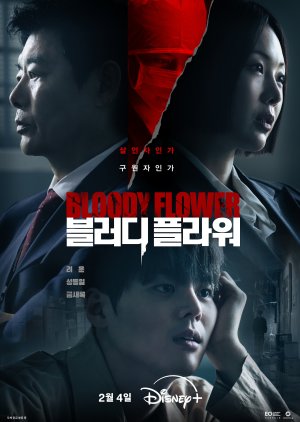
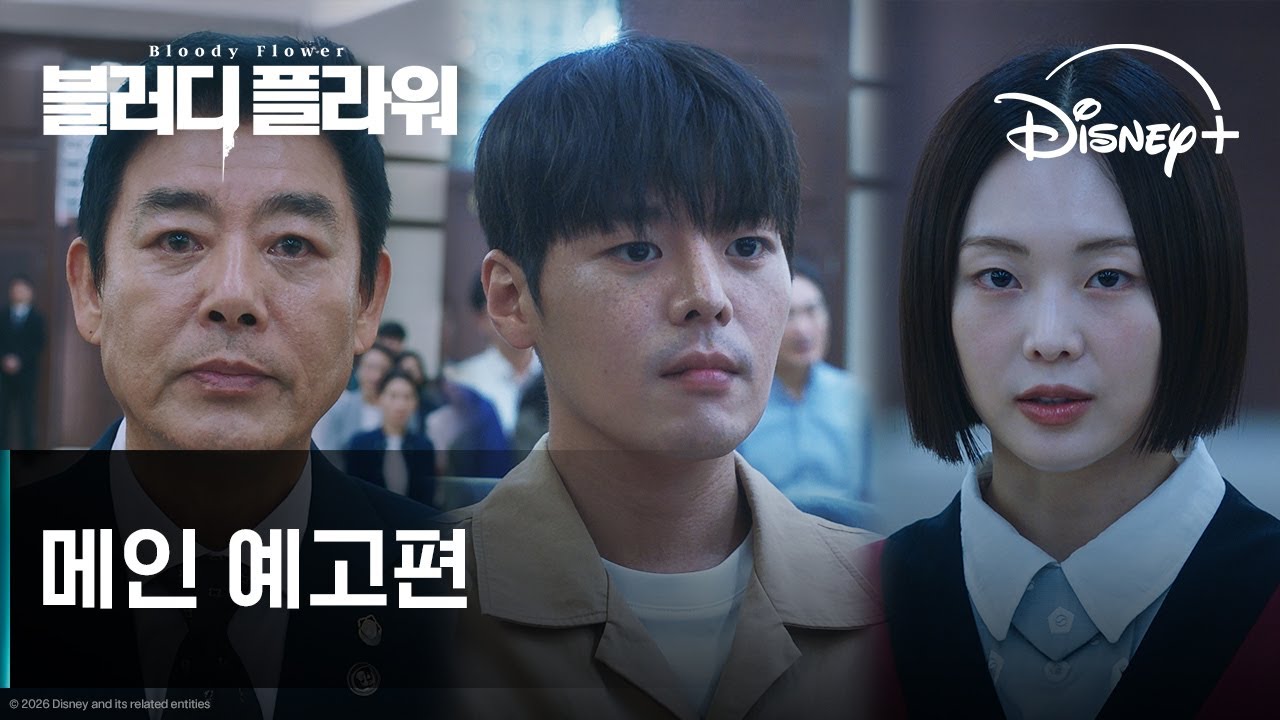
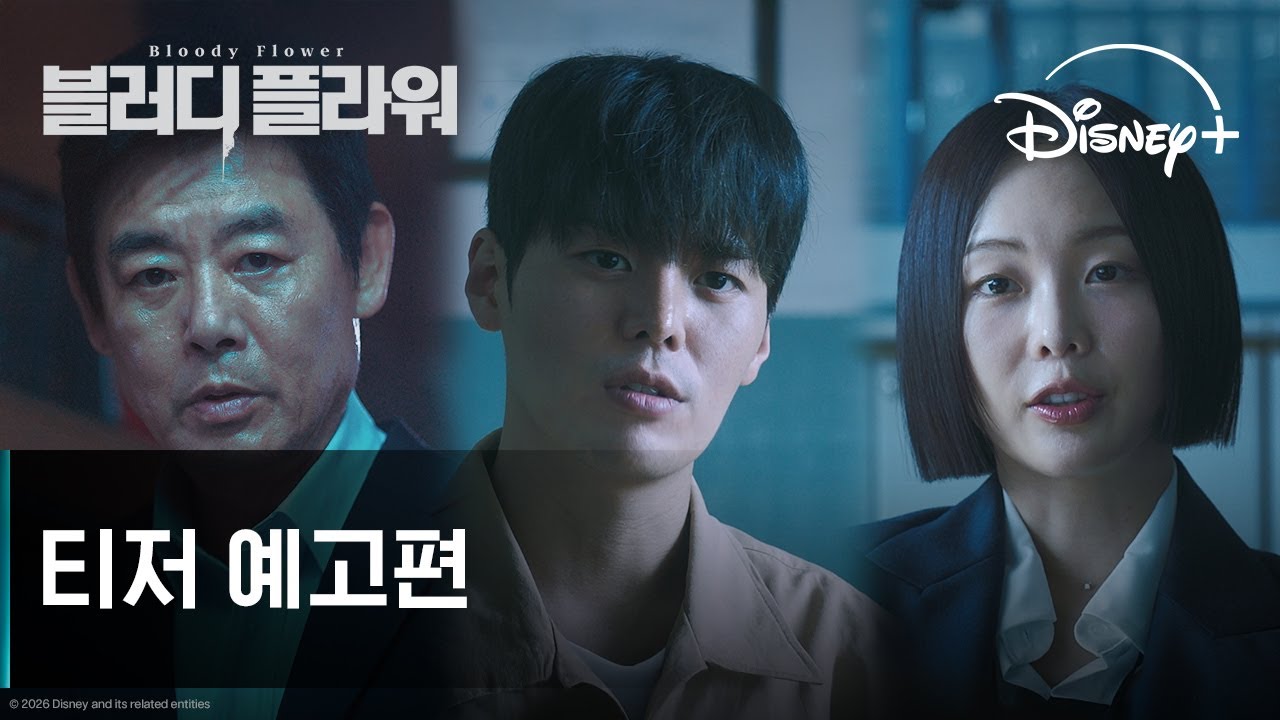
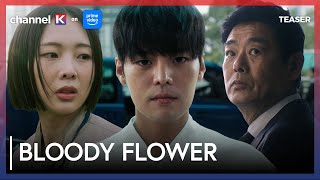
![BLOODY Flower (2026) 블러디 플라워 [ENG SUB] Drama Trailer ( Ryeo Un )](https://img.youtube.com/vi/lKTw-8XPSLg/maxresdefault.jpg)
![사건의 진짜 실체 | [블러디 플라워] 7-8회 예고편 | 디즈니+](https://img.youtube.com/vi/unn0MDprUJo/maxresdefault.jpg)
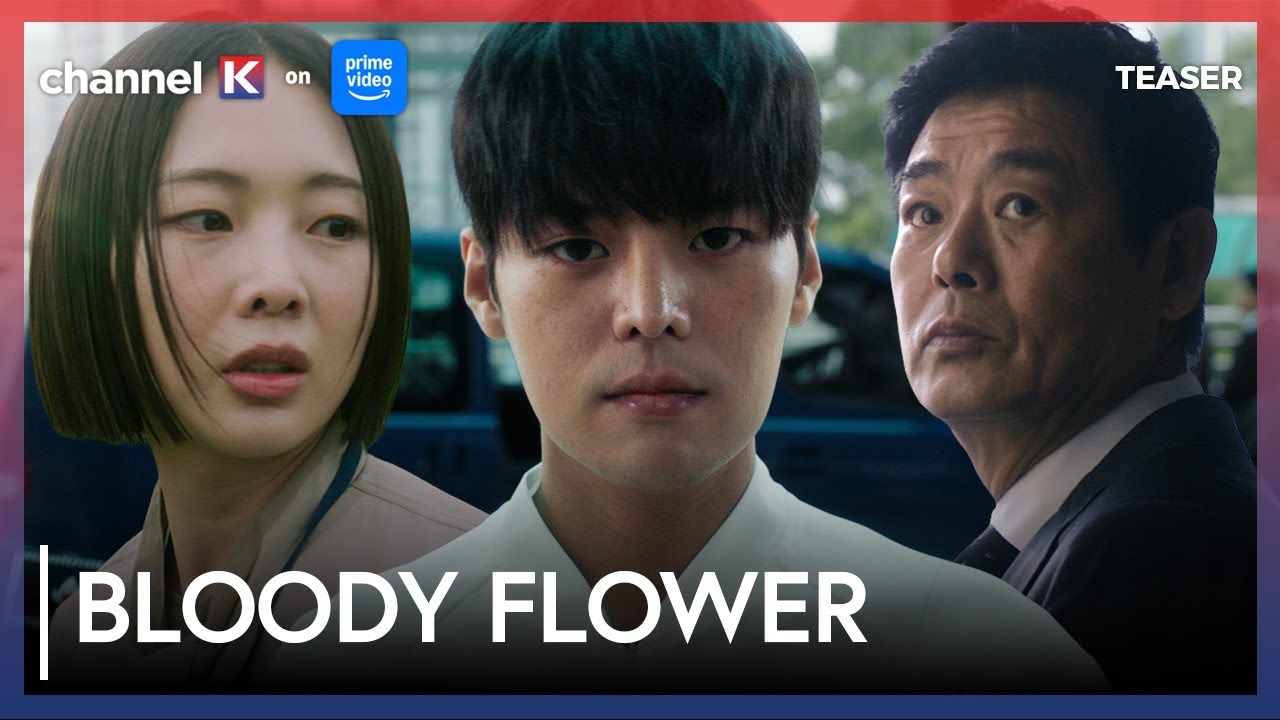













![BLOODY Flower (2026) 블러디 플라워 [ENG SUB] Drama Trailer ( Ryeo Un )](https://img.youtube.com/vi/lKTw-8XPSLg/mqdefault.jpg)
![사건의 진짜 실체 | [블러디 플라워] 7-8회 예고편 | 디즈니+](https://img.youtube.com/vi/unn0MDprUJo/mqdefault.jpg)



 Viewer Ratings