


As You Stood By
당신이 죽였다
Eun Su works in sales at a luxury goods retailer in a high-end department store. She has carried the weight of a deep-seated trauma since childhood. Her friend, Hui Su, shares a similar burden; both women haunted by the scars of their pasts. Hui Su was once a promising children's book writer, but her career has long since stalled. Now, she is trapped in a nightmarish existence due to the violent abuse of her husband, Jin Pyo. Desperate to escape his cruelty, Hui Su lives in constant fear, unable to break free from his grasp. One day, Eun Su reaches a breaking point and decides to take matters into her own hands. She makes the life-altering decision to save her friend by ending Jin Pyo's life. Together, the two women devise a plan to kill him. As their plan unfolds, Jin So Baek, the powerful CEO of Jingang Firm, becomes aware of their intentions. Sensing an opportunity, he offers his support, becoming a strong ally in their dangerous mission. With his backing, the women feel emboldened, but their journey is fraught with peril as they navigate the dangerous path ahead. ~~ Adapted from the novel "Naomi and Kanako" (ナオミとカナコ) by Okuda Hideo (奥田英朗). ~~ Release dates: Sep 18, 2025 (Episode 1-2 premiere | Festival) || Nov 7, 2025 (Online) of her husband, Jin Pyo. Desperate to escape his cruelty, Hui Su lives in constant fear, unable to break free from his grasp. One day, Eun Su reaches a breaking point and decides to take matters into her own hands. She makes the life-altering decision to save her friend by ending Jin Pyo's life. Together, the two women devise a plan to kill him. As their plan unfolds, Jin So Baek, the powerful CEO of Jingang Firm, becomes aware of their intentions. Sensing an opportunity, he offers his support, becoming a strong ally in their dangerous mission. With his backing, the women feel emboldened, but their journey is fraught with peril as they navigate the dangerous path ahead. ~~ Adapted from the novel "Naomi and Kanako" (ナオミとカナコ) by Okuda Hideo (奥田英朗). ~~ Release dates: Sep 18, 2025 (Episode 1-2 premiere | Festival) || Nov 7, 2025 (Online) of her husband, Jin Pyo. Desperate to escape his cruelty, Hui Su lives in constant fear, unable to break free from his grasp. One day, Eun Su reaches a breaking point and decides to take matters into her own hands. She makes the life-altering decision to save her friend by ending Jin Pyo's life. Together, the two women devise a plan to kill him. As their plan unfolds, Jin So Baek, the powerful CEO of Jingang Firm, becomes aware of their intentions. Sensing an opportunity, he offers his support, becoming a strong ally in their dangerous mission. With his backing, the women feel emboldened, but their journey is fraught with peril as they navigate the dangerous path ahead. ~~ Adapted from the novel "Naomi and Kanako" (ナオミとカナコ) by Okuda Hideo (奥田英朗). ~~ Release dates: Sep 18, 2025 (Episode 1-2 premiere | Festival) || Nov 7, 2025 (Online)
Synopsis
Eun Su works in sales at a luxury goods retailer in a high-end department store. She has carried the weight of a deep-seated trauma since childhood. Her friend, Hui Su, shares a similar burden; both women haunted by the scars of their pasts. Hui Su was once a promising children's book writer, but her career has long since stalled. Now, she is trapped in a nightmarish existence due to the violent abuse of her husband, Jin Pyo. Desperate to escape his cruelty, Hui Su lives in constant fear, unable to break free from his grasp. One day, Eun Su reaches a breaking point and decides to take matters into her own hands. She makes the life-altering decision to save her friend by ending Jin Pyo's life. Together, the two women devise a plan to kill him. As their plan unfolds, Jin So Baek, the powerful CEO of Jingang Firm, becomes aware of their intentions. Sensing an opportunity, he offers his support, becoming a strong ally in their dangerous mission. With his backing, the women feel emboldened, but their journey is fraught with peril as they navigate the dangerous path ahead. ~~ Adapted from the novel "Naomi and Kanako" (ナオミとカナコ) by Okuda Hideo (奥田英朗). ~~ Release dates: Sep 18, 2025 (Episode 1-2 premiere | Festival) || Nov 7, 2025 (Online) of her husband, Jin Pyo. Desperate to escape his cruelty, Hui Su lives in constant fear, unable to break free from his grasp. One day, Eun Su reaches a breaking point and decides to take matters into her own hands. She makes the life-altering decision to save her friend by ending Jin Pyo's life. Together, the two women devise a plan to kill him. As their plan unfolds, Jin So Baek, the powerful CEO of Jingang Firm, becomes aware of their intentions. Sensing an opportunity, he offers his support, becoming a strong ally in their dangerous mission. With his backing, the women feel emboldened, but their journey is fraught with peril as they navigate the dangerous path ahead. ~~ Adapted from the novel "Naomi and Kanako" (ナオミとカナコ) by Okuda Hideo (奥田英朗). ~~ Release dates: Sep 18, 2025 (Episode 1-2 premiere | Festival) || Nov 7, 2025 (Online) of her husband, Jin Pyo. Desperate to escape his cruelty, Hui Su lives in constant fear, unable to break free from his grasp.
One day, Eun Su reaches a breaking point and decides to take matters into her own hands. She makes the life-altering decision to save her friend by ending Jin Pyo's life. Together, the two women devise a plan to kill him. As their plan unfolds, Jin So Baek, the powerful CEO of Jingang Firm, becomes aware of their intentions. Sensing an opportunity, he offers his support, becoming a strong ally in their dangerous mission. With his backing, the women feel emboldened, but their journey is fraught with peril as they navigate the dangerous path ahead.
~~ Adapted from the novel "Naomi and Kanako" (ナオミとカナコ) by Okuda Hideo (奥田英朗). ~~ Release dates: Sep 18, 2025 (Episode 1-2 premiere | Festival) || Nov 7, 2025 (Online)
Reviews
Gripping Thriller This was an extreme case of domestic abuse. Two women, best friends. who, in spite of being close, carried deep secrets from each other. One harboured guilt for looking away from her mother's abuse perpetrated by her father and the other, enduring years of domestic violence from her husband. It is very concerning when two supposed to be best friends can't share their innermost secrets because together they could have educated themselves, found ways and legal means to stop the perpetrators instead of resorting to crime. Korea has laws to prevent domestic violence but sadly for the victims, patriarchal attitudes are still very strong and considered as just a "family matter," Families would rather keep silent for fear of the stigma it carries in society where they are shunned and blamed.At the end of the drama, it would have been a great service if the two actresses did a public service announcement providing information to domestic abuse victims on how to stop the violence committed against them. Most victims are probably not aware that there are ways they could take to protect themselves.
EVERY STORY DESERVES TO BE TOLD!!! Every story deserves to be told. Every problem deserves to be seen and understood because that’s how we enlighten people about what’s really happening. Yes, domestic abuse is a serious issue, but that doesn’t mean we should stop sharing these stories. Too many people still feel like they’re suffering alone. The more we speak up, the more we remind them: you’re not the only one, and you’re not invisible.Drama review:Everyone delivered seriously, I loved every bit of it!! That scene where the officer snatched the cap off that clueless detective head so the press could get a clear shot of her face? Iconic. We need more stories like this. Domestic violence survivors deserve to know they’re not alone. Sometimes, all it takes is one brave person or one decisive moment to change everything. Keep speaking up. Keep walking forward.
And Still, She Scrubs at the Stain That Will Not Fade Overview:As You Stood By is a haunting psychological thriller and social drama that dissects the lingering scars of domestic abuse, complicity, and moral cowardice. It follows two women: Hui-su, a once-bright illustrator now trapped in a violent marriage, and Eun-su, her long-lost friend burdened by guilt for doing nothing when Hui-su needed her most. Their reunion sets off a spiral of blood, guilt, and redemption that blurs the line between survival and sin.At its heart, the series isn’t about the murder itself but everything that festers around it: the silence, the denial, the bystanders who look away. Each character personifies a different form of complicity: Hui-su’s mother-in-law who endured and normalized her own abuse, the sister-in-law cop who uses the system to shield her brother, and Eun-su who convinces herself she’s powerless. The show’s title is its thesis: people who “stand by” are part of the crime.The performances are the show’s soul. Lee You-mi gives a devastating, career-defining performance as Hui-su - fragile, unpredictable, and painfully real. Every glance, every pause, captures a woman teetering between despair and defiance. Her chemistry with Eun-su is electric: tender, volatile, and quietly revolutionary. Their friendship becomes a survival pact, and their choices, however violent, feel like the only escape from a world that refuses to protect them.While the first half of the series is near flawless: intimate, patient, and deeply human; the latter half slips into thriller conventions. The Jang Kang subplot stretches plausibility, the police corruption arc becomes overly melodramatic, and the pacing loses its tight emotional focus. Yet, even amid its narrative clutter, the show never abandons its thematic spine. The final episodes reclaim that focus: bringing Hui-su and Eun-su’s arcs to a cathartic close that feels both tragic and cleansing.It’s as much a story about gendered violence as it is about moral decay and the human instinct to survive even when survival itself feels like guilt.In more details:This show is a bold, unflinching dissection of how violence festers in silence, and how the systems meant to stop it often become accomplices instead. It begins as a slow-burn psychological drama about women surviving abuse, but evolves, sometimes gracefully, sometimes clumsily, into a sprawling story about guilt, power, and the morality of revenge. It’s part domestic thriller, part moral reckoning, and part elegy for women who are told to “endure.” What stands out most is how deeply it understands its characters: each woman carries her trauma not as a badge, but as a shadow that twists every decision she makes.The tone is raw and lived-in. The pacing, at first deliberate and tense, builds a suffocating rhythm that mirrors the experience of abuse: long stretches of quiet dread punctuated by sudden, jarring eruptions of violence. And yet, it’s not just darkness for the sake of darkness. The show dares to imagine recovery, however fragile. It’s about how victims claw back pieces of themselves, how survivors find new definitions of justice when the world denies them any.Stylistically, it straddles a delicate balance between realism and melodrama. The cinematography is cold and claustrophobic. The writing leans heavily on symbolism, all recurring motifs reflecting guilt, denial, and rebirth. The direction isn’t flashy, but it’s deeply empathetic. There’s an understanding of silence, of stillness. You feel the weight of what isn’t said as much as what is.Performance-wise, the acting is uniformly stellar. Lee You Mi playing Hui-su gives one of the most nuanced portrayals of trauma I’ve seen on television. She’s brittle but not broken, fragile but quietly furious. You see every micro-shift in her face: the split second when hope flickers and then dies, the brief flashes of defiance when she decides she’s had enough. Her counterpart, Eun-su, is a woman torn between moral conviction and complicity, trying to make peace with the choices she didn’t make soon enough. Together, their dynamic is electrifying: sisterly, tense, tender, and at times devastating.But where the show truly excels is in its willingness to confront moral ambiguity. It refuses neat binaries, like victim and perpetrator, justice and crime, love and hate. Every major character is guilty of something, whether it’s direct violence or silent complicity.________________________________________Likes:What I loved most was the emotional honesty. The show doesn’t sanitize abuse or romanticize vengeance; it depicts both with harrowing realism. The early half builds tension through empathy rather than spectacle, you don’t watch it to be entertained; you watch it to understand. When Hui-su’s pain finally finds its voice, it’s not in a grand monologue but in quiet gestures, the way she can’t look at her own reflection, the way she stops flinching only when she’s too exhausted to care.The writing’s exploration of female solidarity is remarkable. The bond between Hui-su and Eun-su isn’t a friendship forged in convenience, it’s built from shared guilt and mutual recognition. They’re not perfect allies; they fight, mistrust, and misunderstand each other constantly. But that imperfection is what makes their relationship real. Their alliance isn’t built on ideals but on desperation, and by the end, it transforms into genuine care.I also admired the thematic consistency. Every subplot, from the corrupt cops to Mrs. Jo’s marriage, circles back to one question: what happens when society decides that women’s suffering is normal? Even the side characters contribute to this mosaic of systemic apathy. Officer Choi’s investigation, Jin-young’s obsession, and the power struggles within the force all underscore the same rot, that power protects itself.And yes, the finale. The ending lands beautifully despite its improbable logistics. The idea of Hui-su, Eun-su, and So-baek rebuilding their lives in Vietnam could have felt like escapist fluff, but instead it plays as something gentler, an image of possibility. The show doesn’t promise redemption; it promises survival. Hui-su painting again, Eun-su surfing... these are metaphors for endurance, not erasure. They’ve lived through hell, and though they can’t undo their pasts, they can finally stop running from them.Visually, the shift in tone from Korea’s bleak greys to Vietnam’s warm, humid palette feels symbolic. It’s a breath after suffocation. The silence that once meant fear now means peace. It’s a tender ending that rewards both characters and viewers with emotional release, even if reality would probably never allow such neat closure.________________________________________Dislikes:The middle stretch, especially the introduction of the Jang Kang subplot, feels like narrative filler masquerading as escalation. Up until that point, the show’s tension came from moral stakes; afterward, it relies too heavily on physical chaos. Suddenly, we have kidnappings, car chases, and half-baked conspiracies that feel out of sync with the show’s emotional core.Jin-young’s descent into full-blown villainy is another misstep. She devolves into a one-note antagonist. Her actions, such as manipulating police records, imprisoning people in her home, covering up murders, border on cartoonish. It’s frustrating because her earlier complexity hinted at something richer: a woman torn between justice and obsession. By the time she’s driving a car stuffed with a corpse off a highway, the show has traded psychological realism for pulp.Jeong-suk’s late-game meltdown, while emotionally potent, also strains believability. Her killing of Jang Kang, a shocking moment on paper, feels more like the writers trying to tie up loose ends than a logical evolution of her character. Up until then, she’s never been violent. The sudden brutality reads as shock-for-shock’s-sake, not an earned catharsis.Structurally, the pacing suffers. The series starts as a tight, deliberate thriller but bloats in its final third. Subplots pile on like dominoes: embezzlement scandals, falsified evidence, political corruption. It’s as if the writers, terrified of slowing down, forget that stillness was their strongest weapon. The quieter, more introspective beats, the ones that gave the show its soul, are buried beneath sensational twists.And then there’s the issue of tone. The early episodes maintain a delicate realism, but the final ones flirt with soap opera extremes. The emotional throughline, like Hui-su’s healing and Eun-su’s redemption, gets muddied by unnecessary chaos. A few narrative threads (like Jin-pyo’s embezzlement case or Officer Choi’s sudden removal) are wrapped up too neatly or forgotten altogether. It’s almost tragic, because the show had everything it needed to end perfectly about two episodes earlier.________________________________________Final Thoughts:In spite of its stumbles, this series is a haunting, unforgettable experience, a work of moral ambition that falters in execution but never in heart. It’s one of those dramas that leaves bruises, not because of its violence, but because of its truth. It doesn’t flatter its audience with moral clarity; it asks us to sit with discomfort, to recognize the small violences we overlook every day.Its performances elevate even the most implausible twists. Hui-su and Eun-su’s arcs are modern tragedies written in the language of guilt and grace. Mrs. Jo’s final confession reframes decades of pain with stunning simplicity. So-baek’s steadfast loyalty becomes the emotional glue that keeps everything from collapsing into nihilism. Even the antagonists (Jin-young and Jeong-suk) are reflections of what happens when justice curdles into obsession.Thematically, it delivers a gut-punch: complicity kills. It shows, unflinchingly, that silence is an act, not a neutral stance, that to turn away from someone suffering is to side with their abuser. The courtroom scenes in the finale are a masterstroke of emotional honesty: Hui-su taking full responsibility for murder, Eun-su admitting her moral blindness, both women choosing truth over convenience. It’s not redemption; it’s reclamation.The ending in Vietnam, though idealistic, offers a poetic closure. It’s not just a change in setting but in spirit. They’ve been defined by trauma for so long that the simple act of living (painting, surfing, laughing) becomes revolutionary. The show closes not with a grand moral pronouncement but with a quiet insistence: healing is possible, but only if you stop pretending it’s easy.This show is messy, human, and at times maddening, but that’s what makes it brilliant. It exposes how evil hides behind politeness, how survival demands compromise, and how forgiveness doesn’t always mean freedom. For all its narrative chaos, it stays true to its emotional DNA: a story about women reclaiming their voices in a world determined to silence them.If you can forgive its excesses, what remains is an extraordinary exploration of guilt, justice, and survival. It’s not a perfect series, but it’s an important one. It forces you to look inward, to question your own quiet complicities, and to consider how easily cruelty becomes invisible when we call it “normal.” When the credits roll, you’re not left cheering or mourning. You’re left thinking, and that, perhaps, is the greatest achievement any story can claim.
Videos: Trailer & Teasers
![As You Stood By | Official Teaser | Netflix [ENG SUB]](https://img.youtube.com/vi/65Htgbf-MCo/maxresdefault.jpg)
![As You Stood By | Official Teaser | Lee Yoo-mi | Jang Seung-jo | Netflix [ENG SUB]](https://img.youtube.com/vi/BEfMmxsR7GI/maxresdefault.jpg)

Cast






Related News
Watch: Lim Ji Yeon, Heo Nam Jun, And More Impress At Script Reading For "My Royal Nemesis"
Lim Ji Yeon and Heo Nam Jun are gearing up for their new rom-com “My Royal Nemesis” (also known as “Wicked World”)! Earlier on April 2, SBS’s upcoming
3 Key Points To Anticipate In IU And Byeon Woo Seok’s Upcoming Drama “Perfect Crown”
Get ready for the premiere of “Perfect Crown”! Set in an alternate universe where modern-day Korea is a constitutional monarchy, “Perfect Crown” tells
Cha Hak Yeon, Kim Jae Hyun, And More Showcase Distinct Charms As Kim Hyang Gi’s Teachers In “Absolute Value Of Romance”
Coupang Play’s upcoming drama “Absolute Value of Romance” has shared brand new stills! “Absolute Value of Romance” tells the story of high school stud
Lee Kwang Soo Will Stop At Nothing To Recover His Missing Gold Bars In New Drama “Gold Land”
Disney+’s upcoming drama “Gold Land” has unveiled new stills of Lee Kwang Soo in character! “Gold Land” follows Hee Joo (Park Bo Young), a security sc
Kim So Yeon In Talks To Star In New Drama
Kim So Yeon may star in a new drama! On April 7, a media outlet reported that Kim So Yeon will star in JTBC’s new drama “Rediscovery of Love” (literal
"Siren's Kiss" Remains No. 1 Ahead Of Finale As "Climax" Continues To Keep Up Tight Ratings Battle
The race for viewership continues! According to Nielsen Korea, the April 6 broadcast of the penultimate episode of Park Min Young and Wi Ha Joon’s rom
More Drama News
🔥the chemistry between all these leads is gonna be insane. absolute value of romance just got even better 💕
19mTrending NOW
"Perfect Crown" And "Climax" Dominate Most Buzzworthy Drama And Actor Rankings
Park Bo Gum's Variety Show "The Village Barber" To Return With Season 2
Watch: 82MAJOR Announces April Comeback Date With Teaser Asking "What's The Fuss?"
DAY6's Wonpil More Than Quadruples His 1st-Week Sales Record With "Unpiltered"
All 13 Members Of SEVENTEEN Renew Contracts With PLEDIS Entertainment
Editor's PICK
Park Bo Young Is A Security Screening Officer Who Stumbles Upon A Huge Amount Of Gold Bars In New Drama “Gold Land”
Watch: Wanna One Walks Down Memory Lane In First Teaser For Reunion Variety Show "WANNA ONE GO : Back To Base"
Park Jinyoung And Kim Min Ju’s Emotional Reunion Takes A Turn With Park Se Hyun’s Arrival In “Still Shining” Finale
Han Ji Min Starts Living With Park Sung Hoon After Fighting With Her Mom In "The Practical Guide To Love"
Kim Se Jeong In Talks To Star In New Webtoon-Based Action Romance Drama
Park Seo Joon, Um Tae Goo, And Jo Hye Joo Confirmed For New Crime Noir Drama “Born Guilty”
As You Stood By
Eun Su works in sales at a luxury goods retailer in a high-end department store. She has carried the weight of a deep-seated trauma since childhood. Her friend, Hui Su, shares a similar burden; both women haunted by the scars of their pasts. Hui Su was once a promising children's book writer, but her career has long since stalled. Now, she is trapped in a nightmarish existence due to the violent abuse of her husband, Jin Pyo. Desperate to escape his cruelty, Hui Su lives in constant fear, unable to break free from his grasp. One day, Eun Su reaches a breaking point and decides to take matters into her own hands. She makes the life-altering decision to save her friend by ending Jin Pyo's life. Together, the two women devise a plan to kill him. As their plan unfolds, Jin So Baek, the powerful CEO of Jingang Firm, becomes aware of their intentions. Sensing an opportunity, he offers his support, becoming a strong ally in their dangerous mission. With his backing, the women feel emboldened, but their journey is fraught with peril as they navigate the dangerous path ahead. ~~ Adapted from the novel "Naomi and Kanako" (ナオミとカナコ) by Okuda Hideo (奥田英朗). ~~ Release dates: Sep 18, 2025 (Episode 1-2 premiere | Festival) || Nov 7, 2025 (Online) of her husband, Jin Pyo. Desperate to escape his cruelty, Hui Su lives in constant fear, unable to break free from his grasp. One day, Eun Su reaches a breaking point and decides to take matters into her own hands. She makes the life-altering decision to save her friend by ending Jin Pyo's life. Together, the two women devise a plan to kill him. As their plan unfolds, Jin So Baek, the powerful CEO of Jingang Firm, becomes aware of their intentions. Sensing an opportunity, he offers his support, becoming a strong ally in their dangerous mission. With his backing, the women feel emboldened, but their journey is fraught with peril as they navigate the dangerous path ahead. ~~ Adapted from the novel "Naomi and Kanako" (ナオミとカナコ) by Okuda Hideo (奥田英朗). ~~ Release dates: Sep 18, 2025 (Episode 1-2 premiere | Festival) || Nov 7, 2025 (Online) of her husband, Jin Pyo. Desperate to escape his cruelty, Hui Su lives in constant fear, unable to break free from his grasp. One day, Eun Su reaches a breaking point and decides to take matters into her own hands. She makes the life-altering decision to save her friend by ending Jin Pyo's life. Together, the two women devise a plan to kill him. As their plan unfolds, Jin So Baek, the powerful CEO of Jingang Firm, becomes aware of their intentions. Sensing an opportunity, he offers his support, becoming a strong ally in their dangerous mission. With his backing, the women feel emboldened, but their journey is fraught with peril as they navigate the dangerous path ahead. ~~ Adapted from the novel "Naomi and Kanako" (ナオミとカナコ) by Okuda Hideo (奥田英朗). ~~ Release dates: Sep 18, 2025 (Episode 1-2 premiere | Festival) || Nov 7, 2025 (Online)
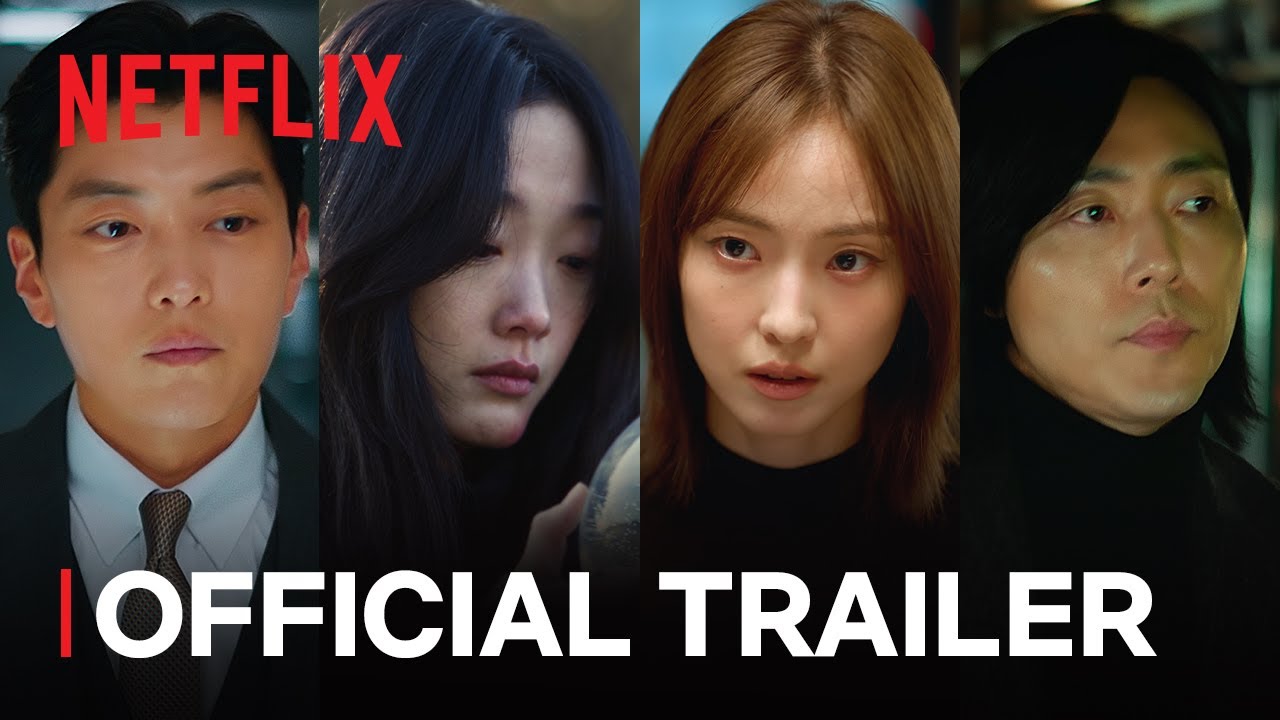
Synopsis
Gripping Thriller This was an extreme case of domestic abuse. Two women, best friends. who, in spite of being close, carried deep secrets from each other. One harboured guilt for looking away from her mother's abuse perpetrated by her father and the other, enduring years of domestic violence from her husband. It is very concerning when two supposed to be best friends can't share their innermost secrets because together they could have educated themselves, found ways and legal means to stop the perpetrators instead of resorting to crime. Korea has laws to prevent domestic violence but sadly for the victims, patriarchal attitudes are still very strong and considered as just a "family matter," Families would rather keep silent for fear of the stigma it carries in society where they are shunned and blamed.At the end of the drama, it would have been a great service if the two actresses did a public service announcement providing information to domestic abuse victims on how to stop the violence committed against them. Most victims are probably not aware that there are ways they could take to protect themselves.
EVERY STORY DESERVES TO BE TOLD!!! Every story deserves to be told. Every problem deserves to be seen and understood because that’s how we enlighten people about what’s really happening. Yes, domestic abuse is a serious issue, but that doesn’t mean we should stop sharing these stories. Too many people still feel like they’re suffering alone. The more we speak up, the more we remind them: you’re not the only one, and you’re not invisible.Drama review:Everyone delivered seriously, I loved every bit of it!! That scene where the officer snatched the cap off that clueless detective head so the press could get a clear shot of her face? Iconic. We need more stories like this. Domestic violence survivors deserve to know they’re not alone. Sometimes, all it takes is one brave person or one decisive moment to change everything. Keep speaking up. Keep walking forward.
And Still, She Scrubs at the Stain That Will Not Fade Overview:As You Stood By is a haunting psychological thriller and social drama that dissects the lingering scars of domestic abuse, complicity, and moral cowardice. It follows two women: Hui-su, a once-bright illustrator now trapped in a violent marriage, and Eun-su, her long-lost friend burdened by guilt for doing nothing when Hui-su needed her most. Their reunion sets off a spiral of blood, guilt, and redemption that blurs the line between survival and sin.At its heart, the series isn’t about the murder itself but everything that festers around it: the silence, the denial, the bystanders who look away. Each character personifies a different form of complicity: Hui-su’s mother-in-law who endured and normalized her own abuse, the sister-in-law cop who uses the system to shield her brother, and Eun-su who convinces herself she’s powerless. The show’s title is its thesis: people who “stand by” are part of the crime.The performances are the show’s soul. Lee You-mi gives a devastating, career-defining performance as Hui-su - fragile, unpredictable, and painfully real. Every glance, every pause, captures a woman teetering between despair and defiance. Her chemistry with Eun-su is electric: tender, volatile, and quietly revolutionary. Their friendship becomes a survival pact, and their choices, however violent, feel like the only escape from a world that refuses to protect them.While the first half of the series is near flawless: intimate, patient, and deeply human; the latter half slips into thriller conventions. The Jang Kang subplot stretches plausibility, the police corruption arc becomes overly melodramatic, and the pacing loses its tight emotional focus. Yet, even amid its narrative clutter, the show never abandons its thematic spine. The final episodes reclaim that focus: bringing Hui-su and Eun-su’s arcs to a cathartic close that feels both tragic and cleansing.It’s as much a story about gendered violence as it is about moral decay and the human instinct to survive even when survival itself feels like guilt.In more details:This show is a bold, unflinching dissection of how violence festers in silence, and how the systems meant to stop it often become accomplices instead. It begins as a slow-burn psychological drama about women surviving abuse, but evolves, sometimes gracefully, sometimes clumsily, into a sprawling story about guilt, power, and the morality of revenge. It’s part domestic thriller, part moral reckoning, and part elegy for women who are told to “endure.” What stands out most is how deeply it understands its characters: each woman carries her trauma not as a badge, but as a shadow that twists every decision she makes.The tone is raw and lived-in. The pacing, at first deliberate and tense, builds a suffocating rhythm that mirrors the experience of abuse: long stretches of quiet dread punctuated by sudden, jarring eruptions of violence. And yet, it’s not just darkness for the sake of darkness. The show dares to imagine recovery, however fragile. It’s about how victims claw back pieces of themselves, how survivors find new definitions of justice when the world denies them any.Stylistically, it straddles a delicate balance between realism and melodrama. The cinematography is cold and claustrophobic. The writing leans heavily on symbolism, all recurring motifs reflecting guilt, denial, and rebirth. The direction isn’t flashy, but it’s deeply empathetic. There’s an understanding of silence, of stillness. You feel the weight of what isn’t said as much as what is.Performance-wise, the acting is uniformly stellar. Lee You Mi playing Hui-su gives one of the most nuanced portrayals of trauma I’ve seen on television. She’s brittle but not broken, fragile but quietly furious. You see every micro-shift in her face: the split second when hope flickers and then dies, the brief flashes of defiance when she decides she’s had enough. Her counterpart, Eun-su, is a woman torn between moral conviction and complicity, trying to make peace with the choices she didn’t make soon enough. Together, their dynamic is electrifying: sisterly, tense, tender, and at times devastating.But where the show truly excels is in its willingness to confront moral ambiguity. It refuses neat binaries, like victim and perpetrator, justice and crime, love and hate. Every major character is guilty of something, whether it’s direct violence or silent complicity.________________________________________Likes:What I loved most was the emotional honesty. The show doesn’t sanitize abuse or romanticize vengeance; it depicts both with harrowing realism. The early half builds tension through empathy rather than spectacle, you don’t watch it to be entertained; you watch it to understand. When Hui-su’s pain finally finds its voice, it’s not in a grand monologue but in quiet gestures, the way she can’t look at her own reflection, the way she stops flinching only when she’s too exhausted to care.The writing’s exploration of female solidarity is remarkable. The bond between Hui-su and Eun-su isn’t a friendship forged in convenience, it’s built from shared guilt and mutual recognition. They’re not perfect allies; they fight, mistrust, and misunderstand each other constantly. But that imperfection is what makes their relationship real. Their alliance isn’t built on ideals but on desperation, and by the end, it transforms into genuine care.I also admired the thematic consistency. Every subplot, from the corrupt cops to Mrs. Jo’s marriage, circles back to one question: what happens when society decides that women’s suffering is normal? Even the side characters contribute to this mosaic of systemic apathy. Officer Choi’s investigation, Jin-young’s obsession, and the power struggles within the force all underscore the same rot, that power protects itself.And yes, the finale. The ending lands beautifully despite its improbable logistics. The idea of Hui-su, Eun-su, and So-baek rebuilding their lives in Vietnam could have felt like escapist fluff, but instead it plays as something gentler, an image of possibility. The show doesn’t promise redemption; it promises survival. Hui-su painting again, Eun-su surfing... these are metaphors for endurance, not erasure. They’ve lived through hell, and though they can’t undo their pasts, they can finally stop running from them.Visually, the shift in tone from Korea’s bleak greys to Vietnam’s warm, humid palette feels symbolic. It’s a breath after suffocation. The silence that once meant fear now means peace. It’s a tender ending that rewards both characters and viewers with emotional release, even if reality would probably never allow such neat closure.________________________________________Dislikes:The middle stretch, especially the introduction of the Jang Kang subplot, feels like narrative filler masquerading as escalation. Up until that point, the show’s tension came from moral stakes; afterward, it relies too heavily on physical chaos. Suddenly, we have kidnappings, car chases, and half-baked conspiracies that feel out of sync with the show’s emotional core.Jin-young’s descent into full-blown villainy is another misstep. She devolves into a one-note antagonist. Her actions, such as manipulating police records, imprisoning people in her home, covering up murders, border on cartoonish. It’s frustrating because her earlier complexity hinted at something richer: a woman torn between justice and obsession. By the time she’s driving a car stuffed with a corpse off a highway, the show has traded psychological realism for pulp.Jeong-suk’s late-game meltdown, while emotionally potent, also strains believability. Her killing of Jang Kang, a shocking moment on paper, feels more like the writers trying to tie up loose ends than a logical evolution of her character. Up until then, she’s never been violent. The sudden brutality reads as shock-for-shock’s-sake, not an earned catharsis.Structurally, the pacing suffers. The series starts as a tight, deliberate thriller but bloats in its final third. Subplots pile on like dominoes: embezzlement scandals, falsified evidence, political corruption. It’s as if the writers, terrified of slowing down, forget that stillness was their strongest weapon. The quieter, more introspective beats, the ones that gave the show its soul, are buried beneath sensational twists.And then there’s the issue of tone. The early episodes maintain a delicate realism, but the final ones flirt with soap opera extremes. The emotional throughline, like Hui-su’s healing and Eun-su’s redemption, gets muddied by unnecessary chaos. A few narrative threads (like Jin-pyo’s embezzlement case or Officer Choi’s sudden removal) are wrapped up too neatly or forgotten altogether. It’s almost tragic, because the show had everything it needed to end perfectly about two episodes earlier.________________________________________Final Thoughts:In spite of its stumbles, this series is a haunting, unforgettable experience, a work of moral ambition that falters in execution but never in heart. It’s one of those dramas that leaves bruises, not because of its violence, but because of its truth. It doesn’t flatter its audience with moral clarity; it asks us to sit with discomfort, to recognize the small violences we overlook every day.Its performances elevate even the most implausible twists. Hui-su and Eun-su’s arcs are modern tragedies written in the language of guilt and grace. Mrs. Jo’s final confession reframes decades of pain with stunning simplicity. So-baek’s steadfast loyalty becomes the emotional glue that keeps everything from collapsing into nihilism. Even the antagonists (Jin-young and Jeong-suk) are reflections of what happens when justice curdles into obsession.Thematically, it delivers a gut-punch: complicity kills. It shows, unflinchingly, that silence is an act, not a neutral stance, that to turn away from someone suffering is to side with their abuser. The courtroom scenes in the finale are a masterstroke of emotional honesty: Hui-su taking full responsibility for murder, Eun-su admitting her moral blindness, both women choosing truth over convenience. It’s not redemption; it’s reclamation.The ending in Vietnam, though idealistic, offers a poetic closure. It’s not just a change in setting but in spirit. They’ve been defined by trauma for so long that the simple act of living (painting, surfing, laughing) becomes revolutionary. The show closes not with a grand moral pronouncement but with a quiet insistence: healing is possible, but only if you stop pretending it’s easy.This show is messy, human, and at times maddening, but that’s what makes it brilliant. It exposes how evil hides behind politeness, how survival demands compromise, and how forgiveness doesn’t always mean freedom. For all its narrative chaos, it stays true to its emotional DNA: a story about women reclaiming their voices in a world determined to silence them.If you can forgive its excesses, what remains is an extraordinary exploration of guilt, justice, and survival. It’s not a perfect series, but it’s an important one. It forces you to look inward, to question your own quiet complicities, and to consider how easily cruelty becomes invisible when we call it “normal.” When the credits roll, you’re not left cheering or mourning. You’re left thinking, and that, perhaps, is the greatest achievement any story can claim.
![As You Stood By | Official Teaser | Netflix [ENG SUB]](https://img.youtube.com/vi/65Htgbf-MCo/mqdefault.jpg)
![As You Stood By | Official Teaser | Lee Yoo-mi | Jang Seung-jo | Netflix [ENG SUB]](https://img.youtube.com/vi/BEfMmxsR7GI/mqdefault.jpg)

the chemistry between all these leads is gonna be insane. absolute value of romance just got even better 💕
19mMore Drama News
🔥Where to Watch

Netflix
Synopsis
Eun Su works in sales at a luxury goods retailer in a high-end department store. She has carried the weight of a deep-seated trauma since childhood. Her friend, Hui Su, shares a similar burden; both women haunted by the scars of their pasts. Hui Su was once a promising children's book writer, but her career has long since stalled. Now, she is trapped in a nightmarish existence due to the violent abuse of her husband, Jin Pyo. Desperate to escape his cruelty, Hui Su lives in constant fear, unable to break free from his grasp. One day, Eun Su reaches a breaking point and decides to take matters into her own hands. She makes the life-altering decision to save her friend by ending Jin Pyo's life. Together, the two women devise a plan to kill him. As their plan unfolds, Jin So Baek, the powerful CEO of Jingang Firm, becomes aware of their intentions. Sensing an opportunity, he offers his support, becoming a strong ally in their dangerous mission. With his backing, the women feel emboldened, but their journey is fraught with peril as they navigate the dangerous path ahead. ~~ Adapted from the novel "Naomi and Kanako" (ナオミとカナコ) by Okuda Hideo (奥田英朗). ~~ Release dates: Sep 18, 2025 (Episode 1-2 premiere | Festival) || Nov 7, 2025 (Online) of her husband, Jin Pyo. Desperate to escape his cruelty, Hui Su lives in constant fear, unable to break free from his grasp. One day, Eun Su reaches a breaking point and decides to take matters into her own hands. She makes the life-altering decision to save her friend by ending Jin Pyo's life. Together, the two women devise a plan to kill him. As their plan unfolds, Jin So Baek, the powerful CEO of Jingang Firm, becomes aware of their intentions. Sensing an opportunity, he offers his support, becoming a strong ally in their dangerous mission. With his backing, the women feel emboldened, but their journey is fraught with peril as they navigate the dangerous path ahead. ~~ Adapted from the novel "Naomi and Kanako" (ナオミとカナコ) by Okuda Hideo (奥田英朗). ~~ Release dates: Sep 18, 2025 (Episode 1-2 premiere | Festival) || Nov 7, 2025 (Online) of her husband, Jin Pyo. Desperate to escape his cruelty, Hui Su lives in constant fear, unable to break free from his grasp. One day, Eun Su reaches a breaking point and decides to take matters into her own hands. She makes the life-altering decision to save her friend by ending Jin Pyo's life. Together, the two women devise a plan to kill him. As their plan unfolds, Jin So Baek, the powerful CEO of Jingang Firm, becomes aware of their intentions. Sensing an opportunity, he offers his support, becoming a strong ally in their dangerous mission. With his backing, the women feel emboldened, but their journey is fraught with peril as they navigate the dangerous path ahead. ~~ Adapted from the novel "Naomi and Kanako" (ナオミとカナコ) by Okuda Hideo (奥田英朗). ~~ Release dates: Sep 18, 2025 (Episode 1-2 premiere | Festival) || Nov 7, 2025 (Online)
Reviews0
Overall Rating
Rating Distribution
Featured Reviews
Videos: Trailers & Teasers
Cast


 Viewer Ratings
Related News
Watch: Lim Ji Yeon, Heo Nam Jun, And More Impress At Script Reading For "My Royal Nemesis"
Lim Ji Yeon and Heo Nam Jun are gearing up for their new rom-com “My Royal Nemesis” (also known as “Wicked World”)! Earl...
3 Key Points To Anticipate In IU And Byeon Woo Seok’s Upcoming Drama “Perfect Crown”
Get ready for the premiere of “Perfect Crown”! Set in an alternate universe where modern-day Korea is a constitutional m...
Cha Hak Yeon, Kim Jae Hyun, And More Showcase Distinct Charms As Kim Hyang Gi’s Teachers In “Absolute Value Of Romance”
Coupang Play’s upcoming drama “Absolute Value of Romance” has shared brand new stills! “Absolute Value of Romance” tells...
Lee Kwang Soo Will Stop At Nothing To Recover His Missing Gold Bars In New Drama “Gold Land”
Disney+’s upcoming drama “Gold Land” has unveiled new stills of Lee Kwang Soo in character! “Gold Land” follows Hee Joo ...
Kim So Yeon In Talks To Star In New Drama
Kim So Yeon may star in a new drama! On April 7, a media outlet reported that Kim So Yeon will star in JTBC’s new drama ...
"Siren's Kiss" Remains No. 1 Ahead Of Finale As "Climax" Continues To Keep Up Tight Ratings Battle
The race for viewership continues! According to Nielsen Korea, the April 6 broadcast of the penultimate episode of Park ...